





Storage units are incredibly useful when you need extra space for furniture, seasonal items, or personal belongings. However, many people assume they can store almost anything inside them. That’s not true. In fact, there are several things that should never be placed in a storage unit because they can cause safety hazards, attract pests, violate facility rules, or even break the law.
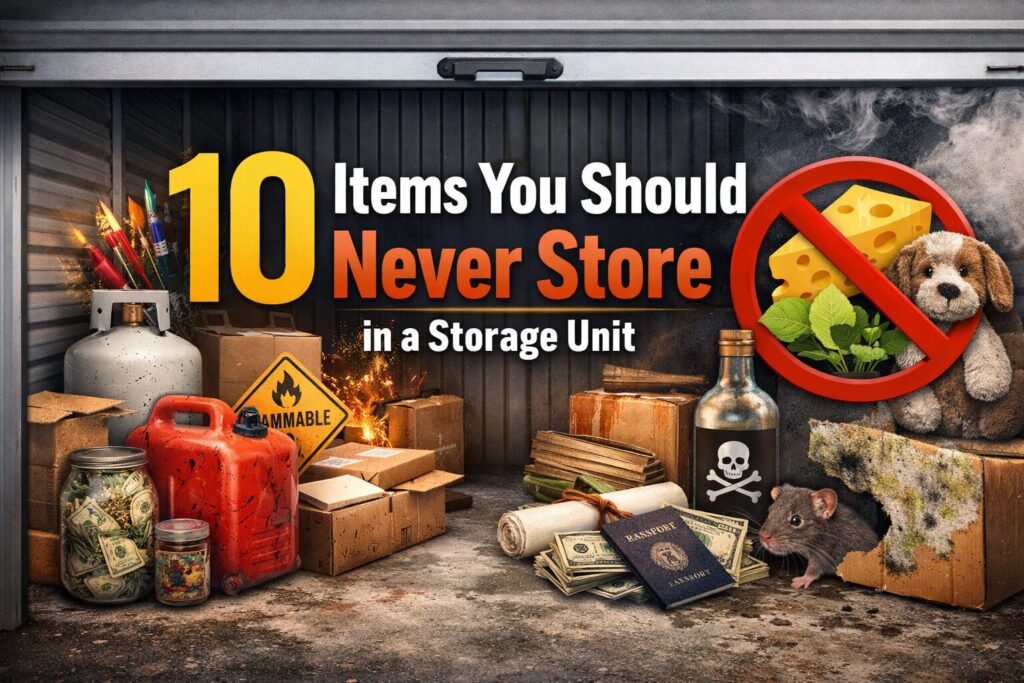
Understanding the 10 Items You Should Never Store in a Storage Unit can protect your belongings, keep other renters safe, and prevent costly penalties from storage facilities.
Let’s explore the most common items that should stay far away from your storage unit.
Introduction to Storage Unit Safety
Storage facilities are designed to protect belongings in a secure and controlled environment. Most units provide protection from weather, theft, and clutter in your home.
However, they are not designed for hazardous, living, or highly valuable items. Every storage company has strict policies about what tenants can and cannot store.
Ignoring these rules can lead to:
Unit termination
Additional fines
Damage to property
Legal issues
Health and safety risks
Before renting a unit, it’s always wise to review the facility’s prohibited item list. You can also review general storage guidelines from organizations like the Self Storage Association:
https://www.selfstorage.org
Understanding Storage Facility Rules
Why Restrictions Exist
Storage rules exist primarily for safety and liability reasons. Facilities often store hundreds or thousands of units in one building. If one unit contains dangerous materials, it could affect the entire property.
For example:
Fire hazards can destroy the facility.
Food attracts rodents and insects.
Chemicals can leak and contaminate other units.
These rules protect both customers and facility owners.
Consequences of Ignoring Rules
If you store prohibited items, several things may happen:
Your rental agreement could be canceled.
Your belongings could be removed.
You may face fines or legal action.
Damage claims might not be covered by insurance.
Now, let’s examine the 10 Items You Should Never Store in a Storage Unit.
1. Perishable Food Items
Food should never be stored in a storage unit.
Even sealed packages can attract pests such as:
Rats
Mice
Cockroaches
Ants
Food also spoils quickly in storage units that experience heat or humidity changes.
Risk of Pests and Mold
Once pests enter a storage facility, they can spread rapidly to other units. This creates a serious sanitation problem.
Spoiled food can also produce mold and foul odors that damage nearby belongings.
2. Flammable or Combustible Materials
Flammable items are extremely dangerous in enclosed storage environments.
Examples of Flammable Items
Common prohibited materials include:
Gasoline
Propane tanks
Fireworks
Paint thinner
Kerosene
Oil containers
These materials can ignite due to heat, pressure, or accidental leaks, potentially causing fires or explosions.
Most storage contracts strictly prohibit them.
3. Living Plants
Plants might seem harmless, but they don’t belong in storage units.
Effects of Lack of Light and Air
Plants require:
Sunlight
Water
Fresh air
Storage units provide none of these consistently.
Within days, plants will begin to wilt and die. Dead plants can create moisture problems, mold growth, and unpleasant odors.
4. Living Animals or Pets
Animals should never be placed inside storage units under any circumstance.
Animal Safety and Welfare
Leaving an animal in a storage unit is dangerous and illegal in many places. Animals need:
Oxygen
Water
Temperature control
Food
Without these essentials, they cannot survive.
Storage facilities also conduct inspections, so such situations are often quickly reported.
5. Illegal or Stolen Items
This rule might seem obvious, but it’s worth mentioning.
Storage Facility Inspections
If authorities suspect illegal activity, storage units can be inspected with a warrant.
Illegal items may include:
Stolen property
Drugs
Counterfeit goods
Illegal weapons
Storing such items could result in serious criminal charges.
6. Wet or Damp Items
Moisture is one of the biggest enemies of stored belongings.
Drying and Preparation Tips
Never store:
Wet clothes
Damp furniture
Moist carpets
Recently cleaned upholstery
These items can quickly grow mold and mildew.
Before storing anything, make sure it is completely dry.
7. Hazardous Chemicals
Hazardous chemicals can leak, react with other substances, or produce toxic fumes.
Examples of Hazardous Chemicals
Common examples include:
Pesticides
Fertilizers
Cleaning solvents
Paint removers
Industrial chemicals
These materials pose health risks to staff and customers.
8. Valuable Cash or Irreplaceable Documents
Although storage units are secure, they are not the safest place for extremely valuable items.
Better Storage Alternatives
Avoid storing:
Cash
Birth certificates
Passports
Rare collectibles
Family heirlooms
Instead, consider:
Bank safe deposit boxes
Home safes
Digital backups for documents
If something irreplaceable disappears, insurance may not cover the loss.
9. Unregistered or Inoperable Vehicles
Some storage facilities allow vehicles, but there are strict requirements.
Proper Vehicle Storage Requirements
Vehicles usually must be:
Registered
Insured
Operational
Free of fluid leaks
Abandoned or broken vehicles can cause environmental hazards.
Always check the facility’s vehicle storage policy before storing a car, boat, or motorcycle.
10. Scented or Strong-Smelling Items
Strong odors can easily spread between storage units.
Impact on Other Renters
Items like:
Scented candles
Strong spices
Chemicals
Perfume collections
may cause complaints from other renters.
Odors can also seep into furniture, clothing, and fabrics in nearby units.
How to Choose Safe Items for Storage
Safe items typically include:
Furniture
Clothing
Household goods
Books
Electronics
Seasonal decorations
Sporting equipment
Before storing anything, ask yourself:
Is the item hazardous?
Can it spoil?
Does it contain moisture?
Is it extremely valuable?
If the answer is yes to any of these, reconsider storing it.
Storage Preparation Best Practices
Follow these tips for safe storage:
1. Clean items before storing
Dust and dirt attract pests.
2. Use sealed containers
Plastic bins provide better protection than cardboard.
3. Label everything clearly
This makes retrieval easier.
4. Elevate items off the floor
Use pallets or shelving to prevent moisture damage.
5. Choose climate-controlled units for delicate items
This helps protect electronics, wood furniture, and documents.
Frequently Asked Questions
1. Can I store canned food in a storage unit?
Most facilities discourage storing any food, even canned items, because they may attract pests.
2. Are electronics safe in storage units?
Yes, but climate-controlled units are recommended to protect against humidity and temperature changes.
3. Can I store paint in a storage unit?
Some facilities allow sealed paint cans, but many prohibit them due to chemical risks.
4. Are storage units temperature controlled?
Standard units are not. Climate-controlled units regulate temperature and humidity.
5. Can I store appliances in a storage unit?
Yes, but appliances should be cleaned and dried thoroughly to prevent mold.
6. What happens if prohibited items are found in my unit?
The facility may terminate your contract and require you to remove the items immediately.
Conclusion
Knowing the 10 Items You Should Never Store in a Storage Unit can save you from serious problems. Items like food, flammable materials, chemicals, and living things create safety hazards and violate storage policies.
Storage units are designed for safe household goods, furniture, and seasonal items—not dangerous or perishable materials.
By following these guidelines, you can keep your belongings protected, respect facility rules, and ensure a safe environment for everyone using the storage facility.


