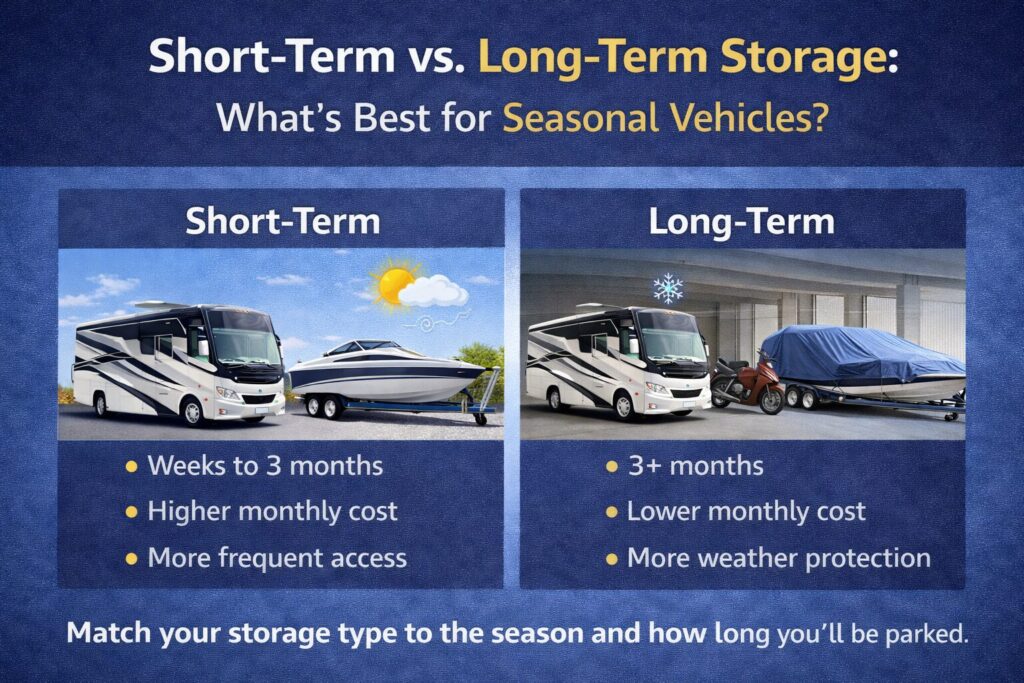
Seasonal vehicles—like RVs, boats, classic cars, motorcycles, and trailers—aren’t used year-round. That makes storage a necessity, not a luxury. The big question most owners face is short-term vs. long-term storage: what’s best for seasonal vehicles?
The right answer depends on how often you use your vehicle, the climate, your budget, and how much protection you need. This guide breaks it all down clearly so you can choose the smartest option without overpaying or risking damage.
What Is Short-Term Storage?
Short-term storage typically refers to storing a vehicle for a few weeks up to 3 months.
Common Uses for Short-Term Storage
-
Between trips or seasons
-
Temporary relocation or travel
-
Waiting for repairs or upgrades
-
Storing during busy weeks or holidays
Short-term storage focuses on convenience and flexibility rather than deep long-term protection.
Pros of Short-Term Storage
-
Lower upfront commitment
-
Easier access and frequent entry
-
Ideal for active RV or boat owners
-
Often month-to-month contracts
For owners who use their seasonal vehicles regularly, short-term storage is often the simplest solution.
Cons of Short-Term Storage
-
Higher monthly rates
-
Less preparation for long-term wear
-
Often outdoor-only options
-
Greater exposure to weather if uncovered
Short-term storage works best when the vehicle won’t sit idle for long periods.
What Is Long-Term Storage?
Long-term storage usually means 3 months or longer, often spanning an entire off-season.
Common Uses for Long-Term Storage
-
Winter boat or RV storage
-
Off-season motorcycle storage
-
Classic cars stored for preservation
-
Extended travel or deployment
Long-term storage prioritizes protection, security, and preservation.
Pros of Long-Term Storage
-
Lower monthly cost with longer contracts
-
Better options for covered or indoor storage
-
Reduced wear from sun and weather
-
Less stress and fewer check-ins
For vehicles that won’t be used for months, long-term storage is often the safest and most cost-effective choice.
Cons of Long-Term Storage
Long-term storage is best when you’re confident the vehicle won’t be needed soon.
Short-Term vs. Long-Term Storage: Side-by-Side Comparison
| Feature |
Short-Term Storage |
Long-Term Storage |
| Duration |
Weeks to 3 months |
3+ months |
| Monthly Cost |
Higher |
Lower |
| Access Frequency |
High |
Limited |
| Best For |
Active use |
Seasonal downtime |
| Weather Protection |
Limited |
Strong |
| Prep Required |
Minimal |
Extensive |
Which Is Best for Different Seasonal Vehicles?
RVs
Boats
Motorcycles
Classic & Collector Cars
Key Factors to Consider Before Choosing
1. Climate
Harsh sun, snow, hail, or humidity favors long-term covered or indoor storage.
2. Vehicle Value
Higher-value vehicles benefit more from long-term, secure storage.
3. Usage Frequency
Frequent use favors short-term storage; inactivity favors long-term.
4. Security Needs
Long-term storage should include gated access, cameras, and lighting.
Common Mistakes Seasonal Vehicle Owners Make
-
Choosing short-term storage for long idle periods
-
Not preparing vehicles for long-term storage
-
Paying premium rates when long-term discounts are available
-
Ignoring climate and weather exposure
Avoiding these mistakes can save money and prevent damage.
FAQs: Short-Term vs. Long-Term Storage for Seasonal Vehicles
1. Is long-term storage cheaper than short-term?
Yes. Long-term storage often comes with discounted monthly rates.
2. Can I switch from short-term to long-term storage later?
Most facilities allow it, but availability and pricing may change.
3. Do I need to winterize for short-term storage?
Usually no—but long-term storage almost always requires winterization or prep.
4. Is covered storage better for long-term use?
Absolutely. Covered or indoor storage reduces weather-related wear.
5. How often should I check on a vehicle in long-term storage?
Ideally every 30–60 days, or ensure the facility performs routine inspections.
6. What’s the biggest factor in choosing between the two?
How long the vehicle will sit unused. Time is the deciding factor.
Final Verdict: Short-Term or Long-Term—Which Wins?
When deciding short-term vs. long-term storage for seasonal vehicles, the best option depends on how long your vehicle will sit and how much protection it needs.
-
Choose short-term storage for active seasons and frequent use
-
Choose long-term storage for off-seasons, winter months, and extended downtime
The right choice protects your investment, saves money, and ensures your vehicle is ready when the season returns.