






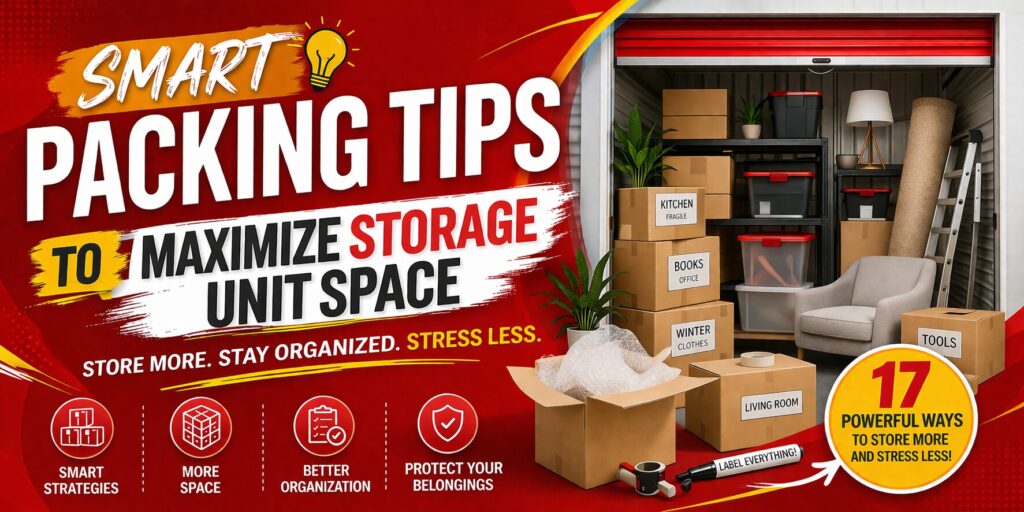
When people rent a unit, they often think the job is simple: move everything in, close the door, and come back later. But that approach usually wastes space fast. The best Smart Packing Tips to Maximize Storage Unit Space start long before the first box hits the floor. A little planning can help you fit more, protect your belongings, and make it much easier to find things later.
A storage unit should not feel like a giant junk drawer. It should work like a neat extension of your home or office. When packed well, even a smaller unit can hold more than you expect. When packed badly, even a large unit fills up in no time.
Let’s walk through the smartest ways to store more and stress less.
Why Smart Packing Tips to Maximize Storage Unit Space Matter
Packing a storage unit well is not only about squeezing in more items. It is also about keeping them safe, organized, and easy to reach. When you stack carelessly or toss odd-shaped items in at random, you create dead space. That means you pay for room you are not really using.
Good storage packing has four simple goals:
- Use as much vertical and floor space as possible
- Keep fragile items protected
- Make important belongings easy to access
- Reduce the chance of damage, tipping, or crushing
That is why strategy beats speed every time. Sure, it may take a bit longer at the start, but it saves hours of frustration later.
Start with a Clear Storage Strategy
Before you pack a single box, sort what you plan to store.
Group your items into simple categories such as:
- Furniture
- Clothing
- Documents
- Seasonal decorations
- Kitchenware
- Business inventory
- Sentimental items
- Frequently used items
Now go one step further. Divide each group by weight, size, and how often you will need it.
Here is a smart rule to follow:
| Item Type | Best Placement |
|---|---|
| Heavy, durable items | Bottom and back |
| Light boxes | Top of stacks |
| Fragile items | Safe middle zones |
| Frequently used items | Front of the unit |
| Long-term storage items | Back corners and rear wall |
This one habit changes everything. Instead of building a messy pile, you create a layout with purpose.
Pick the Right Boxes and Supplies
Boxes matter more than many people think. When every container is a different size, your stacks become uneven. Uneven stacks waste air space and create safety problems.
Use sturdy, similar-size boxes whenever possible. Medium boxes are often the easiest to carry and stack. Save larger boxes for light, bulky items like bedding, lampshades, or pillows.
Helpful packing supplies include:
- Strong tape
- Bubble wrap
- Packing paper
- Furniture covers
- Mattress bags
- Stretch wrap
- Labels or markers
- Plastic bags for hardware
Try not to rely too much on trash bags. They slump, shift, and leave awkward empty spaces between items. Boxes are easier to stack and label, so they usually make better use of the unit.
Use Vertical Space Like a Pro
One of the biggest mistakes people make is packing outward instead of upward.
A storage unit has height for a reason. If you stop at waist level, you leave valuable space unused. Stacking boxes safely lets you store more without renting extra room.
Here is the basic stacking formula:
- Put the heaviest boxes on the bottom
- Place medium-weight boxes in the middle
- Put lighter boxes on top
- Keep stacks level and stable
- Avoid building towers that wobble
If you plan to store items for many months, shelving can be a game changer. Shelves help keep bins organized, reduce crushing, and create cleaner access. They are especially useful for files, business supplies, tools, and seasonal bins.
Break Down Furniture to Create More Room
Large furniture eats up space quickly. The fix is simple: disassemble what you can.
Take apart:
- Bed frames
- Table legs
- Shelves
- Desk components
- Couch feet
- Removable glass pieces
Flat items store much more efficiently than fully assembled furniture. A table with legs attached may take up the same footprint as several stacked boxes. Remove those legs, and suddenly you have room to spare.
Put screws, bolts, and brackets into labeled plastic bags. Tape the bag securely to the underside of the furniture when possible, or keep all hardware together in one clearly marked box.
That way, nothing goes missing when it is time to reassemble.
Make Furniture Work Double Duty
Furniture can store other things too. That is free space, so use it.
You can place soft goods or boxed items inside:
- Dressers
- Filing cabinets
- Wardrobes
- Ottomans
- Trunks
- Cabinets
Just do it carefully. Avoid overloading drawers or stuffing items so tightly that wood warps or joints strain. Add padding between hard items and delicate finishes.
This trick works especially well for linens, clothes, office supplies, and lightweight décor.
Pack Mattresses, Sofas, and Large Pieces the Smart Way
Bulky items can dominate a storage unit if they are not placed thoughtfully.
Mattresses may be stored upright in some situations, which can free up floor space, but the safest approach depends on the item and the facility’s guidance. Features and rules can vary by location, so it is smart to verify your facility’s conditions before you decide how to place oversized pieces.
For big furniture:
- Cover it to reduce dust
- Keep it off damp floors when possible
- Avoid leaning unstable pieces at risky angles
- Protect corners and fabric surfaces
Think of these larger items as the frame of your layout. Build the rest of the unit around them.
Create Aisles Instead of Packing Wall to Wall
It is tempting to fill every inch from front to back. But that often backfires.
Without an aisle, you may need to empty half the unit just to find one box. That is exhausting, and it increases the chance of damaging your items.
A narrow center or side walkway is worth the space it uses. It gives you access, visibility, and flexibility.
A smart layout often looks like this:
- Back wall for long-term items
- Side walls for stacked boxes and medium-use items
- Front area for essentials
- One narrow walkway for access
This is especially helpful if you store holiday items, business stock, baby gear, or records you may need to pull out later.
Label Everything for Faster Access
A storage unit without labels becomes a guessing game.
Write clear labels on at least two sides of each box. Better yet, label three sides if the box may be turned during stacking.
Instead of writing only “Kitchen,” get specific:
- Kitchen – Plates and bowls
- Winter – Coats and gloves
- Office – Tax files 2024
- Holiday – Tree lights and ornaments
You can also number each box and keep a master inventory list on your phone or in a notebook.
Example:
| Box Number | Contents | Location |
|---|---|---|
| 1 | Winter jackets | Front left |
| 2 | Holiday lights | Middle shelf |
| 3 | Tax documents | Back right |
| 4 | Extra bedding | Top stack center |
This tiny bit of effort pays off big time later.
Protect Delicate and Valuable Items
Not everything should be packed the same way. Fragile items need breathing room and support.
Use these simple rules:
- Wrap breakables individually
- Fill empty box space so items do not shift
- Never place heavy boxes on fragile ones
- Keep valuables in safer, easier-to-monitor spots
- Avoid packing delicate items near sharp metal edges or unstable furniture
Some belongings need more care depending on heat, humidity, or temperature swings. Facility conditions differ, and some amenities or protections may vary by location, so checking the specific rules and features of your storage provider is a wise move before storing sensitive items.
Avoid Common Storage Space Mistakes
Even organized people make these mistakes. Watch out for them.
Random packing without categories
When similar items are split into many boxes and scattered across the unit, retrieval becomes a chore.
Too many odd-shaped bags
Soft bags waste stackable space and often slide around.
No plan for access
Items you need most should never be buried at the back.
Overstacking
Tall, unstable piles are risky and can crush items below.
Ignoring empty furniture interiors
Dressers and cabinets should not sit empty unless there is a reason.
Skipping labels
You may think you will remember, but after a few months, it all looks the same.
Packing Tips for Seasonal and Business Storage
Some storage needs are not static. They rotate all year.
For seasonal storage, keep the current or upcoming season near the front. For example:
- Spring and summer gear in front when winter ends
- Holiday décor moved forward in late fall
- Winter coats placed near the door as cold weather approaches
For business storage, create mini-zones:
- Documents together
- Inventory together
- Display items together
- Shipping supplies together
Shelving and a clean inventory system work especially well here. If you run a small business, this setup can save serious time during busy weeks.
A Step-by-Step Layout Plan for Any Unit Size
Here is a practical layout you can copy.
Step 1: Place flat and bulky items first
Start with mattresses, headboards, tables, and long furniture pieces along the walls or rear.
Step 2: Add heavy boxes
Build sturdy base layers with heavier boxes in back corners and along the bottom rows.
Step 3: Stack medium and light boxes upward
Use similar box sizes to keep rows stable and neat.
Step 4: Fill furniture interiors
Use dresser drawers, cabinets, and trunks for smaller items.
Step 5: Place fragile items in protected zones
Keep them off the floor if possible and away from crushing pressure.
Step 6: Reserve the front for high-use items
Things you need often should be easy to grab.
Step 7: Leave a walkway
Even a slim aisle can make a huge difference.
Here is a simple example:
| Area of Unit | Best Use |
|---|---|
| Back wall | Long-term storage, archived boxes |
| Side walls | Stackable boxes, small furniture |
| Front section | Frequently used items |
| Upper space | Lightweight containers |
| Interior of furniture | Soft goods and small items |
Smart Packing Tips to Maximize Storage Unit Space for Long-Term Success
Packing well once is great. Keeping it that way is even better.
Every few months, review the unit and make quick updates:
- Replace weak boxes
- Refresh faded labels
- Move current-season items forward
- Remove things you no longer need
- Update your inventory list after each visit
Storage works best when it stays active and intentional. Otherwise, clutter slowly creeps back in.
For general industry resources, the Self Storage Association describes itself as the official trade organization for the self-storage industry, which makes it a useful place to explore broader storage guidance and industry information.
FAQ: Smart Packing Tips to Maximize Storage Unit Space
1. What is the best way to maximize space in a storage unit?
Use uniform boxes, stack vertically, disassemble furniture, fill empty furniture interiors, and leave a narrow aisle for access.
2. Should I store heavy boxes on top or bottom?
Always place heavy boxes on the bottom. This keeps stacks stable and prevents lighter or fragile boxes from being crushed.
3. Is it better to use boxes or bags in storage?
Boxes are usually better because they stack neatly and waste less space. Bags can sag and create awkward gaps.
4. How do I organize a storage unit so I can find things later?
Label boxes clearly, group similar items together, keep a master inventory list, and place frequently used items near the front.
5. Can I store furniture with items inside it?
Yes, in many cases. Drawers, cabinets, and trunks can hold lightweight items like linens, clothes, or office supplies, as long as the furniture is not strained.
6. Should I leave space to walk inside the unit?
Yes. A small aisle makes it much easier to reach what you need without unpacking half the unit.
7. What items should go in the back of the storage unit?
Place long-term storage items, archived documents, off-season items, and things you rarely need in the back.
8. Where can I find more information about storage facility policies or features?
Check your storage provider directly, because facility features and services can differ by location. You can also review broader industry resources from the Self Storage Association.
Conclusion
The best storage units are not necessarily the biggest ones. They are the ones packed with a plan.
These Smart Packing Tips to Maximize Storage Unit Space can help you fit more, protect your belongings, and make future visits far less stressful. Start with a clear layout, use stackable containers, take furniture apart, label everything, and always think ahead about access.
In other words, do not just store your stuff. Organize it like it matters. Because when you do, every inch works harder for you.


