Why First-Time Storage Renters Need a Plan
Renting a storage unit for the first time can feel simple—but without a plan, it quickly becomes overwhelming. Many first-time renters underestimate how much space they need, how to organize items, or even what should go into storage in the first place.
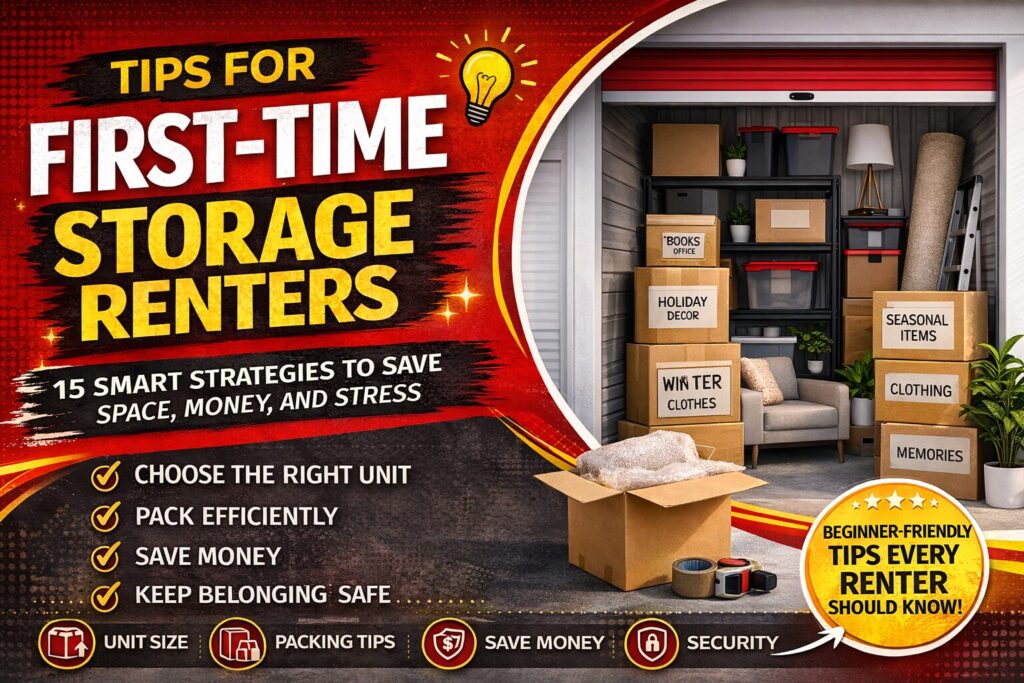
That’s why following the right Tips for First-Time Storage Renters can make a huge difference. A little preparation helps you avoid wasted space, damaged belongings, and unnecessary costs.
Common beginner mistakes
Many first-time renters:
- Choose the wrong unit size
- Pack items randomly
- Forget to label boxes
- Store things they actually need daily
These mistakes can lead to frustration later.
Benefits of planning ahead
When you plan properly, you:
- Save money by choosing the right unit
- Protect your belongings
- Make future access easier
- Reduce stress significantly
How to Choose the Right Storage Unit Size
Picking the correct unit size is one of the most important decisions.
Small vs medium vs large units
- Small units: Boxes, seasonal items, small furniture
- Medium units: Contents of a one-bedroom apartment
- Large units: Full household storage
Estimating your storage needs
A good rule is to list everything you plan to store. If you’re unsure, it’s better to go slightly bigger than too small—but not excessively large.
Understanding Storage Facility Features
Not all storage facilities are the same.
Security, access hours, and location
Look for:
- Secure access gates
- Surveillance cameras
- Good lighting
- Convenient access hours
Climate considerations
Some items—like electronics, documents, or furniture—may need extra protection depending on conditions. Always check what your facility offers.
Budgeting Tips for First-Time Storage Renters
Storage costs can add up if you’re not careful.
Hidden fees to watch out for
Be aware of:
- Administrative fees
- Insurance requirements
- Late payment penalties
Ways to save money on storage
- Choose the right size
- Share a unit if possible
- Pack efficiently to maximize space
Packing Smart Before Moving into Storage
Preparation is key.
Declutter before storing
Don’t pay to store items you don’t need. Sort items into:
- Keep
- Donate
- Store
- Discard
Use proper packing materials
Use sturdy boxes, bubble wrap, and tape to protect your belongings.
How to Organize Your Storage Unit Efficiently
A well-organized unit saves time and effort later.
Stacking and labeling strategies
- Place heavy boxes at the bottom
- Stack lighter boxes on top
- Label all sides clearly
Creating an aisle for access
Leave a small walkway so you can reach items without unpacking everything.
What You Should and Should Not Store
Items ideal for storage
- Seasonal decorations
- Extra furniture
- Clothing
- Business inventory
Items to avoid storing
- Perishable food
- Important daily items
- Hazardous materials
Moving Day Tips for a Smooth Experience
Moving day can be hectic, but planning helps.
Load heavy items first
Start with large furniture and heavy boxes to create a stable base.
Bring essential tools and supplies
Pack:
- Tape
- Labels
- Scissors
- Gloves
Security Tips for First-Time Storage Renters
Choosing a good lock
Invest in a strong, durable lock for added protection.
Keeping valuables secure
Avoid storing highly valuable or irreplaceable items if possible.
How to Access and Maintain Your Unit
Visit and reorganize periodically
Check your unit occasionally to ensure everything is in good condition.
Update your inventory list
Keep a record of what’s inside to avoid confusion.
Common Mistakes First-Time Renters Should Avoid
Overpacking boxes
Heavy boxes can break or become hard to move.
Not labeling items
Unlabeled boxes create frustration when you need something quickly.
Seasonal and Short-Term Storage Tips
Rotating items by season
Keep current-season items near the front for easy access.
Temporary storage during moves
Storage units are perfect for transitions like moving or renovations.
Tips for Long-Term Storage Success
Protecting items from damage
Use covers and padding to keep items safe.
Checking on stored items
Visit occasionally to ensure everything stays in good condition.
FAQ: Tips for First-Time Storage Renters
1. What size storage unit do I need?
It depends on how many items you have. A medium unit works for most small homes.
2. Is storage safe for valuable items?
It can be, but avoid storing extremely valuable or irreplaceable items.
3. How do I organize my storage unit?
Use labels, stack boxes properly, and leave an aisle for access.
4. Can I access my storage unit anytime?
It depends on the facility’s access hours.
5. Should I insure my stored items?
Yes, insurance adds an extra layer of protection.
6. How long can I rent a storage unit?
Most facilities offer flexible short-term and long-term options.
Conclusion
These Tips for First-Time Storage Renters can help you avoid common mistakes and make the most of your storage experience. With the right planning, packing, and organization, your storage unit can become a valuable extension of your home.
Take your time, stay organized, and remember—smart storage is all about making your life easier, not more complicated.