





Finding the right place to store your boat isn’t just about convenience—it’s about protection. Boats are valuable assets, and storing them improperly can lead to theft, vandalism, weather damage, and costly repairs. If you’re researching what to look for in a secure boat storage facility near you, this guide will walk you through exactly what matters most.
Choosing wisely today can protect your boat, your wallet, and your peace of mind.
Why Security Should Be Your Top Priority
Boats often contain expensive electronics, gear, and fuel systems. Even when locked, they can be vulnerable in poorly managed facilities.
A secure storage facility reduces risk by offering:
Controlled access
Surveillance monitoring
Physical barriers
Proper lighting
Professional oversight
Price matters—but security matters more.
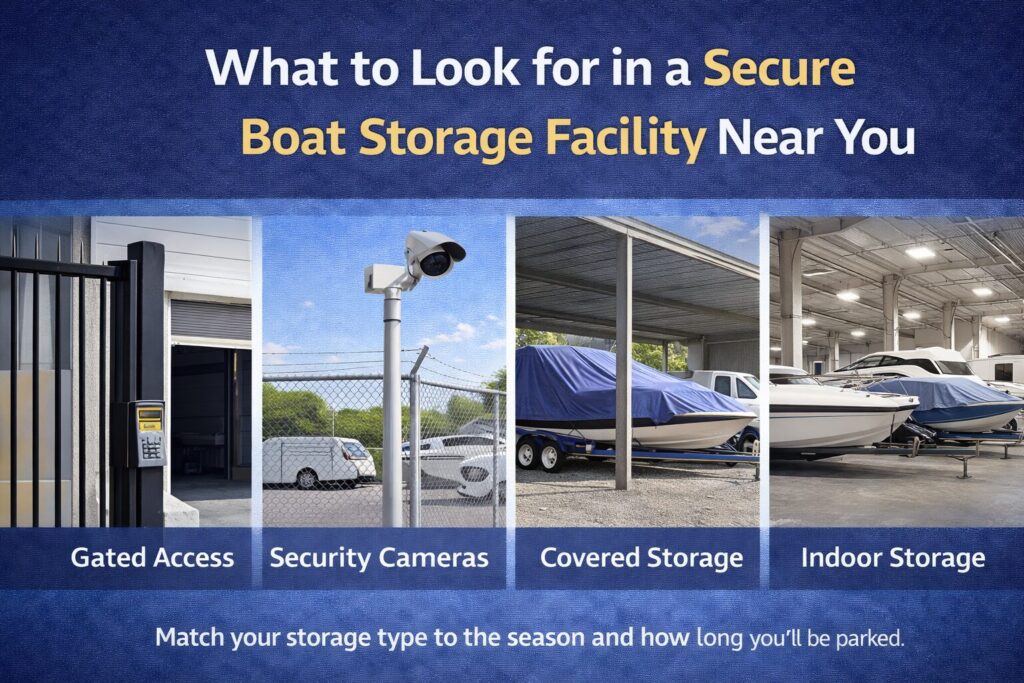
1. Gated Access with Personalized Entry Codes
The first thing to check is whether the facility uses controlled gate access.
What to Look For:
Individual keypad codes
Electronic entry logs
Limited access hours
Automatic gate closing systems
Facilities that allow open access or shared codes increase risk significantly.
2. 24/7 Video Surveillance
Cameras act as both deterrent and evidence in case of incidents.
Important Camera Features:
High-definition video
Night vision capability
Coverage across all entry points
Monitored or recorded footage
If cameras are visible and clearly positioned, that’s a strong sign the facility takes security seriously.
3. Proper Lighting Throughout the Facility
Good lighting discourages theft and vandalism.
Look for:
Bright LED lighting
Illumination across all parking rows
No dark corners or blind spots
A well-lit property signals professional management.
4. Fencing & Perimeter Security
Strong perimeter fencing adds an extra layer of protection.
Ideal Perimeter Features:
Tall fencing (6–8 feet or higher)
Barbed or razor wire (where allowed)
No gaps under fencing
Locked pedestrian access points
Security works best in layers.
5. Covered or Indoor Storage Options
Security isn’t only about crime—it’s also about protection from weather damage.
Indoor Storage
Maximum UV and storm protection
Ideal for long-term storage
Covered Storage
Shields from sun and hail
Reduces fading and surface cracking
Outdoor storage may be secure, but exposure to sun and storms can still cause damage.
6. On-Site Staff or Regular Patrols
Facilities with visible staff presence are typically more secure.
Ask:
Is there an on-site manager?
Are security patrols conducted?
How quickly do they respond to issues?
Active oversight is better than passive monitoring.
7. Cleanliness & Maintenance Standards
A well-maintained facility often reflects strong management practices.
Look for:
Clear drive lanes
No debris or abandoned items
Organized parking layout
Proper drainage
Disorganization can signal weak oversight.
8. Access Hours That Fit Your Needs
While 24/7 access is convenient, some highly secure facilities limit hours to reduce risk.
Choose a balance between:
Accessibility
Security control
Limited overnight access often enhances safety.
9. Insurance & Liability Policies
Always verify:
Whether the facility carries insurance
What their liability covers
Whether your personal boat insurance requires specific storage conditions
Secure facilities often meet insurance standards more easily.
10. Reviews & Local Reputation
Before committing, check:
Online reviews
Community recommendations
Complaint history
Years in business
Consistent positive feedback is a strong indicator of reliability.
Red Flags to Avoid
Open, ungated lots
No visible cameras
Poor lighting
Broken fencing
No staff presence
Unclear contracts
If a facility looks neglected, your boat could be at risk.
Quick Checklist: Secure Boat Storage Essentials
✔ Gated entry with personal code
✔ 24/7 surveillance cameras
✔ Bright lighting
✔ Strong fencing
✔ Covered or indoor options
✔ On-site management
✔ Clean, organized layout
FAQs: What to Look for in a Secure Boat Storage Facility Near You
1. Is covered storage considered secure storage?
Covered storage protects from weather but should also include fencing, cameras, and controlled access.
2. How important are security cameras?
Very important. They deter crime and provide evidence if incidents occur.
3. Should I choose indoor storage over outdoor?
Indoor offers maximum protection, but secure outdoor storage can still be safe if properly managed.
4. Can cheaper facilities still be secure?
Sometimes—but always verify security features rather than assuming.
5. Does secure storage lower insurance costs?
In many cases, yes. Some insurers offer discounts for secure or covered storage.
6. How often should I check on my boat in storage?
Every few weeks is ideal, especially during extreme weather seasons.
Final Thoughts
When deciding what to look for in a secure boat storage facility near you, focus on layered security, professional management, and weather protection—not just monthly price.
A secure facility protects more than your boat—it protects your time, your money, and your peace of mind.


