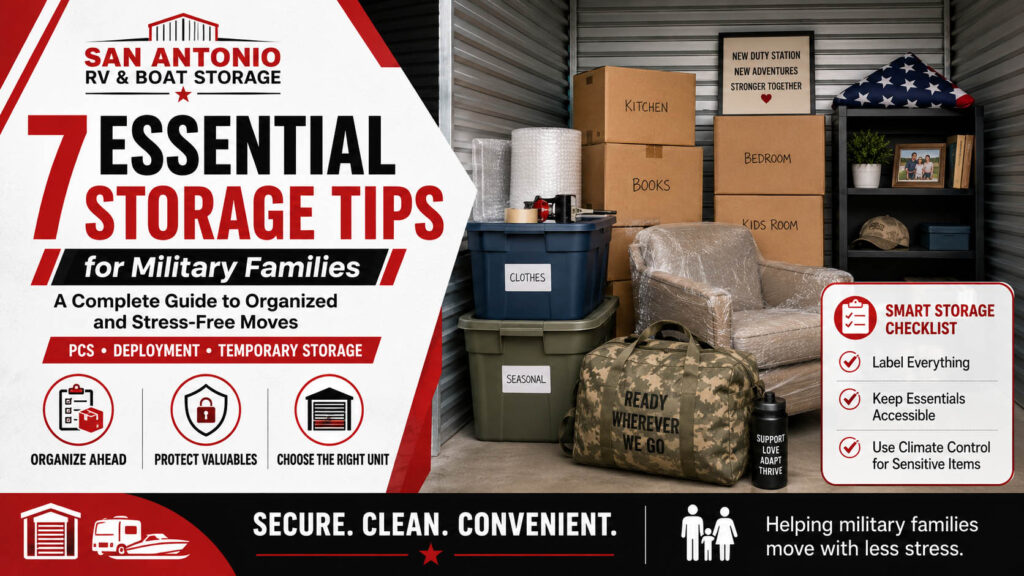
Storage Tips for Military Families: The Ultimate Guide to Stress-Free Organization
Military life often comes with unique challenges. Among the most common are frequent relocations, deployments, temporary duty assignments, and overseas transfers. These situations make effective storage planning a critical part of maintaining an organized household. Understanding the best Storage Tips for Military Families can help reduce stress, protect valuable belongings, and simplify transitions between duty stations.
Whether you’re preparing for a Permanent Change of Station (PCS), deployment, or temporary housing arrangement, the right storage strategy can save both time and money while keeping your possessions secure.
Understanding the Unique Storage Challenges Military Families Face
Military families move significantly more often than civilian households. Frequent relocations require careful planning and organization to prevent damage, loss, or unnecessary expenses.
Common storage challenges include:
- Multiple PCS moves throughout a career
- Overseas assignments
- Deployment-related transitions
- Temporary housing limitations
- Long-term storage needs
- Managing household goods across different locations
Because military families face these situations repeatedly, developing efficient storage habits becomes essential.
Why Proper Storage Planning Matters During Military Relocations
Proper planning minimizes confusion and helps families adapt quickly to new environments.
Frequent PCS Moves and Their Impact
A PCS move often involves strict timelines and logistical complexities. Families may need to store items temporarily while waiting for housing arrangements or shipment deliveries.
Without a structured storage plan, valuable items can become misplaced, damaged, or difficult to access when needed.
Deployment-Related Storage Needs
Deployments create additional storage concerns. Service members and spouses may need to secure belongings for months or even years.
A reliable storage solution ensures that possessions remain protected until the family is reunited.
Creating a Storage Strategy Before Moving
One of the most effective Storage Tips for Military Families is developing a detailed plan before packing begins.
Conducting a Household Inventory
Start by documenting everything you own.
Create an inventory that includes:
| Item Category |
Examples |
| Furniture |
Beds, sofas, tables |
| Electronics |
TVs, laptops, gaming systems |
| Documents |
Passports, records |
| Valuables |
Jewelry, collectibles |
| Seasonal Items |
Decorations, sports gear |
Photograph high-value items and save receipts whenever possible.
Categorizing Essential and Non-Essential Items
Separate belongings into categories:
- Daily necessities
- Frequently used items
- Long-term storage items
- Donation items
- Disposal items
This process reduces packing time and prevents unnecessary storage costs.
Choosing the Right Storage Solution
Not all storage options are created equal.
Self-Storage Units
Self-storage facilities provide flexibility and accessibility.
Benefits include:
- Various unit sizes
- Month-to-month contracts
- Secure access
- Flexible locations
Military Storage Programs
The military often provides storage options for household goods during certain assignments.
Families should consult their transportation office to determine eligibility and coverage.
Portable Storage Containers
Portable containers offer convenience by allowing families to pack at their own pace.
Advantages include:
- Flexible loading schedules
- Reduced transportation stress
- Easy transfer between locations
Decluttering Before Packing
Decluttering is one of the most valuable Storage Tips for Military Families because it reduces moving expenses and storage requirements.
Benefits of Downsizing
Benefits include:
- Lower storage costs
- Faster packing
- Easier unpacking
- Less clutter in new homes
Donation and Disposal Options
Consider donating:
- Clothing
- Toys
- Books
- Small furniture
Many charitable organizations support military communities and accept gently used items.
Packing Techniques for Long-Term Storage
Proper packing protects belongings during extended storage periods.
Using Quality Packing Materials
Invest in:
- Durable boxes
- Bubble wrap
- Packing paper
- Plastic bins
- Furniture covers
Cheap materials often lead to costly damage.
Labeling and Documentation Best Practices
Every box should include:
- Contents
- Room destination
- Fragility level
- Storage date
Color-coded labels can further improve organization.
Protecting Valuable and Sensitive Belongings
Certain items require extra care.
Important Documents
Store documents in waterproof containers.
Examples include:
- Birth certificates
- Passports
- Military records
- Insurance policies
Digital backups add another layer of protection.
Electronics and Appliances
Remove batteries before storage.
Use original packaging when possible and cover electronics to prevent dust accumulation.
Family Heirlooms and Sentimental Items
Wrap fragile items individually and consider climate-controlled storage for irreplaceable possessions.
Maximizing Space Inside Storage Units
Efficient use of space can significantly reduce costs.
Vertical Storage Methods
Take advantage of height by stacking:
- Heavy boxes on bottom
- Lighter boxes on top
- Shelving units where permitted
Creating Accessible Pathways
Leave small walkways throughout the unit.
Benefits include:
- Easier retrieval
- Better organization
- Reduced risk of damage
Climate-Controlled Storage: Is It Worth It?
Climate-controlled units maintain stable temperature and humidity levels.
Ideal for storing:
- Electronics
- Photographs
- Wooden furniture
- Musical instruments
- Artwork
Although slightly more expensive, climate control can prevent costly damage during long-term storage.
Budget-Friendly Storage Tips for Military Families
Military families often operate within relocation budgets.
Ways to save include:
- Compare multiple storage providers.
- Ask about military discounts.
- Avoid storing unnecessary items.
- Share storage space when appropriate.
- Use free packing materials from local businesses.
Many storage companies offer special rates specifically for military personnel.
Managing Storage During Overseas Assignments
International assignments often require extended storage periods.
Recommended steps:
- Conduct a detailed inventory.
- Use climate-controlled storage if possible.
- Maintain digital records.
- Verify insurance coverage.
- Assign a trusted contact to access storage if necessary.
Long-term planning helps avoid complications while stationed abroad.
Security Considerations for Stored Belongings
Security should never be overlooked.
Look for facilities that offer:
- Video surveillance
- Gated access
- Individual unit alarms
- On-site management
- Strong locks
A secure facility provides peace of mind during deployments and relocations.
For additional moving and storage guidance, visit the official resources available through the U.S. Department of Defense at Military OneSource.
Digital Tools for Tracking Stored Items
Technology can simplify storage management.
Useful tools include:
| Tool Type |
Purpose |
| Inventory Apps |
Track belongings |
| Cloud Storage |
Store documents |
| Photo Libraries |
Visual records |
| Spreadsheet Software |
Detailed inventories |
Digital records make retrieval much easier months or years later.
Common Storage Mistakes Military Families Should Avoid
Avoid these common errors:
Overpacking Boxes
Heavy boxes increase injury risks and can break during transport.
Skipping Labels
Unlabeled boxes create frustration during unpacking.
Ignoring Insurance
Unexpected events can occur despite security measures.
Using Poor-Quality Materials
Inferior boxes and tape often fail during long-term storage.
Forgetting Regular Checkups
If possible, inspect stored belongings periodically.
Preparing for Retrieval and Unpacking
Preparation is just as important when retrieving stored items.
Best practices include:
- Review inventory lists beforehand.
- Retrieve essential items first.
- Inspect for damage immediately.
- Organize by room during unloading.
- Update inventory records.
A structured approach speeds up the transition into a new home.
Frequently Asked Questions
1. What are the most important Storage Tips for Military Families?
Creating an inventory, decluttering, labeling boxes clearly, and selecting secure storage facilities are among the most important strategies.
2. Does the military pay for storage during deployments?
In many situations, the military provides storage benefits. Eligibility depends on assignment type and official orders.
3. Is climate-controlled storage necessary?
It is highly recommended for sensitive items such as electronics, documents, photographs, antiques, and wooden furniture.
4. How can military families save money on storage?
Compare providers, seek military discounts, reduce unnecessary items, and choose appropriately sized units.
5. What should not be placed in storage units?
Avoid storing perishables, hazardous materials, flammable items, and anything prohibited by the storage provider.
6. How often should stored belongings be checked?
If possible, inspect storage units every few months to ensure items remain secure and undamaged.
7. Are digital inventories worth the effort?
Absolutely. Digital inventories simplify claims, retrieval, organization, and long-term tracking.
Conclusion
Military life requires flexibility, adaptability, and organization. Following these Storage Tips for Military Families can significantly reduce the stress associated with PCS moves, deployments, overseas assignments, and temporary housing transitions. By creating detailed inventories, selecting appropriate storage solutions, using quality packing materials, and maintaining strong security practices, military families can protect their belongings while simplifying every move.
The more organized your storage strategy becomes, the easier each relocation will be. With thoughtful planning and proactive preparation, military families can focus less on logistical challenges and more on embracing the opportunities that military life brings.