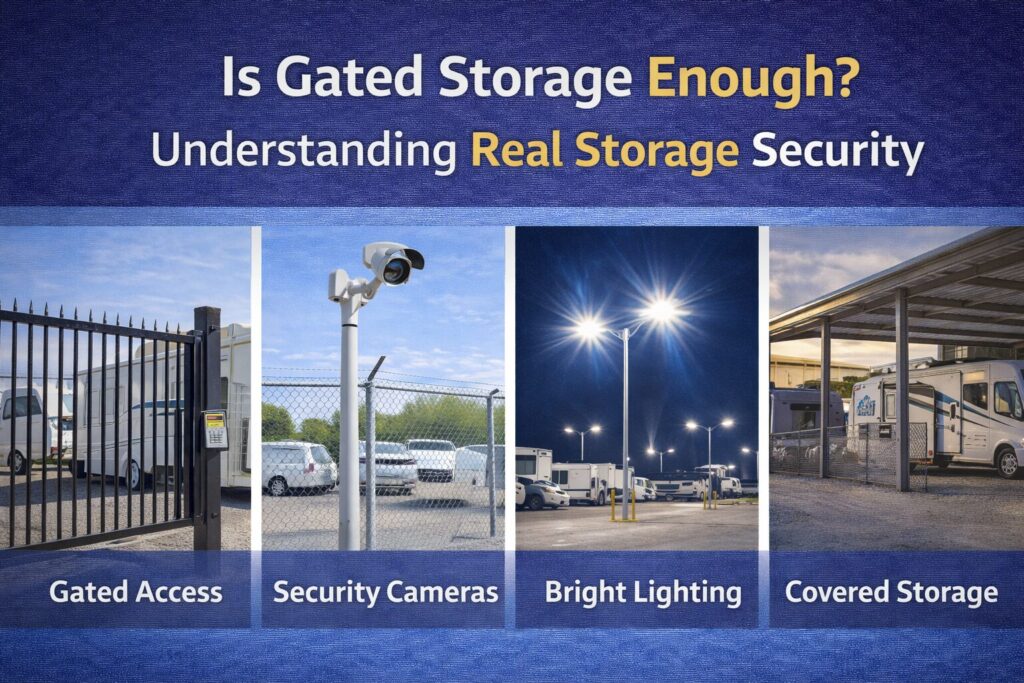
While gated access is an important security feature, it’s only one layer of protection. True storage security involves multiple systems working together. Let’s break down what real security looks like—and what you should demand before trusting any facility with your investment.
What Gated Storage Actually Means
A gated storage facility typically includes:
That’s a solid starting point. But a gate alone doesn’t stop determined theft, vandalism, or internal security risks.
Think of it this way: A gate is like locking your front door—but leaving your windows open.
The Limitations of Gated Storage
1. Shared Access Codes
If facilities use shared codes instead of individual access credentials, there’s little accountability.
2. Tailgating
Vehicles sometimes follow others through the gate without entering a code. This defeats the purpose of controlled entry.
3. No Active Monitoring
If there are no cameras or on-site personnel, a gate only slows down intruders—it doesn’t stop them.
4. Weak Perimeter Fencing
Damaged or low fencing can be easily bypassed.
Gated storage is helpful—but incomplete.
What Real Storage Security Looks Like
True protection comes from layered security. Here’s what separates average facilities from truly secure ones.
1. Individualized Access Control
Look for:
Facilities that track entries can quickly identify suspicious activity.
2. 24/7 Video Surveillance
Cameras should:
Visible cameras also act as a strong deterrent.
3. Bright, Consistent Lighting
Well-lit facilities reduce crime significantly.
Dark corners and shadowed rows increase risk. LED lighting throughout the property is a must.
4. On-Site Staff or Patrols
Security systems are stronger when people are present.
Human oversight adds accountability.
5. Covered or Indoor Storage Options
Security isn’t just about theft—it’s also about protection from:
-
UV damage
-
Hail
-
Storm debris
-
Flooding
A secure facility protects your investment from both crime and climate.
Is Gated Storage Enough for RVs & Boats?
RVs and boats are high-value targets because they:
A simple gate may deter casual trespassers—but it’s not enough for long-term protection.
For higher-value assets, you need:
✔ Gated access
✔ Cameras
✔ Lighting
✔ Staff presence
✔ Strong fencing
✔ Weather protection
Security works best in layers.
Red Flags That a “Gated” Facility Isn’t Truly Secure
-
Gate stays open during business hours
-
No visible cameras
-
Broken fence panels
-
Poor lighting
-
No office or staff presence
-
Overgrown landscaping blocking visibility
If a facility looks neglected, security is likely weak.
How Much More Does Real Security Cost?
Secure facilities may charge slightly higher monthly rates. But consider this:
| Scenario |
Cost Impact |
| Cheap gated-only facility |
Lower monthly rate |
| Theft or vandalism incident |
Thousands in damage |
| Insurance deductible |
Out-of-pocket expense |
| Increased future premiums |
Ongoing cost |
A few extra dollars per month can save thousands in risk exposure.
When Gated Storage Might Be Enough
Gated-only storage may be acceptable if:
Even then, combining gates with cameras and lighting is strongly recommended.
FAQs: Is Gated Storage Enough?
1. Does a gate guarantee security?
No. It reduces access but doesn’t eliminate risk.
2. Are cameras more important than gates?
Both matter. Cameras provide monitoring and evidence; gates restrict access.
3. Should I choose indoor storage for better security?
Indoor storage often adds both climate and theft protection.
4. How can I verify a facility’s security claims?
Visit in person, ask about monitoring systems, and check reviews.
5. Is outdoor gated storage ever safe?
Yes—if combined with cameras, lighting, and strong perimeter fencing.
6. Does secure storage lower insurance rates?
Some insurers offer discounts for gated and monitored storage.
Final Verdict
So, is gated storage enough? In most cases—no.
A gate is only one piece of the security puzzle. Real protection comes from layered systems: controlled access, surveillance, lighting, human oversight, and weather protection.
When storing high-value items like RVs and boats, don’t settle for “gated” alone. Choose facilities that prioritize real security—not just marketing buzzwords.
Your investment deserves more than a gate.