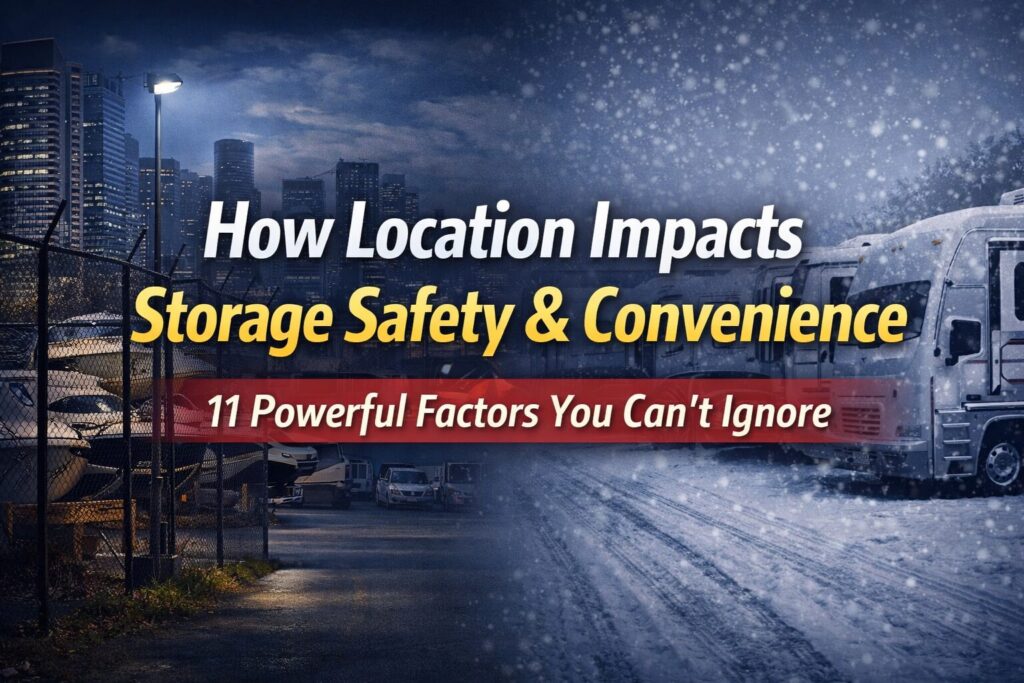
How Location Impacts Storage Safety & Convenience is one of the most overlooked decisions boat and RV owners make. Price matters, sure—but where you store your vehicle can affect theft risk, weather damage, insurance coverage, maintenance needs, and even how often you actually use it.
A storage spot that looks fine on paper may become a daily headache if it’s far away, poorly secured, or exposed to harsh conditions. On the flip side, a well-located facility can save time, reduce risks, and make ownership far more enjoyable.
Let’s break it all down.
Comprehensive Outline
| Heading Level |
Topic |
| H1 |
How Location Impacts Storage Safety & Convenience: 11 Powerful Factors You Can’t Ignore |
| H2 |
Why Storage Location Matters More Than Price |
| H3 |
The True Cost of “Out of the Way” Facilities |
| H3 |
Convenience as a Quality-of-Life Factor |
| H2 |
Urban vs Rural Storage Locations |
| H3 |
Security Differences |
| H3 |
Accessibility Trade-Offs |
| H2 |
Crime Rates and Theft Risk |
| H3 |
High-Risk Zones |
| H3 |
How to Check Local Crime Data |
| H2 |
Proximity to Home or Marina |
| H3 |
Travel Time and Fuel Costs |
| H3 |
Spontaneous Trip Readiness |
| H2 |
Weather Patterns by Region |
| H3 |
Coastal Climate Risks |
| H3 |
Snow Belt and Freeze Zones |
| H2 |
Flood Zones and Drainage Infrastructure |
| H3 |
FEMA Flood Maps |
| H3 |
Elevation and Surface Design |
| H2 |
Traffic and Road Access |
| H3 |
Wide Turns for Large Vehicles |
| H3 |
Peak Hour Congestion |
| H2 |
Emergency Access and Evacuation Routes |
| H3 |
Storm and Wildfire Considerations |
| H3 |
Rapid Retrieval Capability |
| H2 |
Local Regulations and Zoning Laws |
| H3 |
Storage Restrictions |
| H3 |
HOA and Municipal Rules |
| H2 |
Nearby Services and Maintenance Support |
| H3 |
Repair Shops and Marine Services |
| H3 |
Fuel, Dump Stations, and Supplies |
| H2 |
Insurance Premium Impact by Area |
| H3 |
Regional Risk Profiles |
| H3 |
Storage Address & Policy Pricing |
| H2 |
When a Remote Location Makes Sense |
| H3 |
Long-Term Storage |
| H3 |
Mild Climate Regions |
| H2 |
How to Evaluate Location Before Signing |
| H3 |
Site Visit Checklist |
| H3 |
Questions to Ask Facility Managers |
| H2 |
Frequently Asked Questions |
| H2 |
Conclusion: Location Is a Silent Cost Multiplier |
Why Storage Location Matters More Than Price
It’s easy to chase the cheapest monthly rate. But location quietly shapes your entire ownership experience.
The True Cost of “Out of the Way” Facilities
A facility 45 minutes away may save $80 per month. But consider:
-
Extra fuel costs
-
Time spent driving
-
Fewer spontaneous trips
-
Reduced vehicle use
Many owners end up using their boats and RVs less simply because access feels inconvenient.
Convenience as a Quality-of-Life Factor
When your vehicle is close by, weekend trips become effortless. You’ll use your investment more often—and enjoy it more.
Urban vs Rural Storage Locations
Location type changes both safety and access.
Security Differences
Urban facilities often have:
-
Gated access
-
Surveillance cameras
-
On-site staff
Rural lots may have fewer security features but more space.
Accessibility Trade-Offs
Cities = closer but crowded
Rural areas = quieter but farther away
Crime Rates and Theft Risk
Storage safety depends heavily on local crime levels.
High-Risk Zones
Areas with high vehicle theft rates pose greater risks, especially for:
-
Catalytic converters
-
Electronics
-
Batteries
How to Check Local Crime Data
Use public crime maps or local police dashboards before choosing a facility.
Proximity to Home or Marina
Distance directly affects convenience.
Travel Time and Fuel Costs
Long drives add up quickly, especially for large tow vehicles.
Spontaneous Trip Readiness
Closer storage means you can hit the road—or water—without planning days ahead.
Weather Patterns by Region
Coastal Climate Risks
Salt air accelerates corrosion. Storm surges threaten low-lying storage.
Snow Belt and Freeze Zones
Freezing temps can crack plumbing and engines if not winterized.
Flood Zones and Drainage Infrastructure
Flooding is a major storage risk.
FEMA Flood Maps
Check official flood zone maps before signing a contract.
Elevation and Surface Design
Well-designed facilities include:
-
Raised lots
-
Proper grading
-
Stormwater drainage
Traffic and Road Access
Wide Turns for Large Vehicles
Tight streets and low bridges make navigation difficult.
Peak Hour Congestion
Busy roads add stress and time to every trip.
Emergency Access and Evacuation Routes
Emergencies demand quick access.
Storm and Wildfire Considerations
High-risk regions require fast evacuation capability.
Rapid Retrieval Capability
Facilities near highways make urgent departures easier.
Local Regulations and Zoning Laws
Some cities restrict:
HOAs may also limit home storage.
Nearby Services and Maintenance Support
Repair Shops and Marine Services
Being close to service providers saves time and towing costs.
Fuel, Dump Stations, and Supplies
Convenient refueling and supply stops streamline trips.
Insurance Premium Impact by Area
Regional Risk Profiles
Insurers price policies based on:
-
Theft rates
-
Weather risks
-
Flood zones
Storage Address & Policy Pricing
Safer areas often mean lower premiums.
When a Remote Location Makes Sense
Remote storage can work if:
How to Evaluate Location Before Signing
Site Visit Checklist
Questions to Ask Facility Managers
-
Is the lot in a flood zone?
-
Are there evacuation plans?
-
Is security monitored?
-
What are access hours?
Frequently Asked Questions
1. Is closer storage always better?
Usually, but safety and cost must be balanced.
2. Do insurers care about storage location?
Yes. Riskier areas may raise premiums.
3. Are rural storage lots safer?
They may have lower crime but less security.
4. How far is too far for storage?
If access feels inconvenient, it’s too far.
5. Should I avoid coastal storage?
Not always—just ensure corrosion protection.
6. Can location affect resale value?
Yes. Better-stored vehicles retain value longer.
Conclusion: Location Is a Silent Cost Multiplier
How Location Impacts Storage Safety & Convenience goes far beyond geography. It shapes risk, cost, access, and overall enjoyment of ownership. A smart location protects your investment and makes every trip easier.
Choose wisely—it pays off every time you travel.