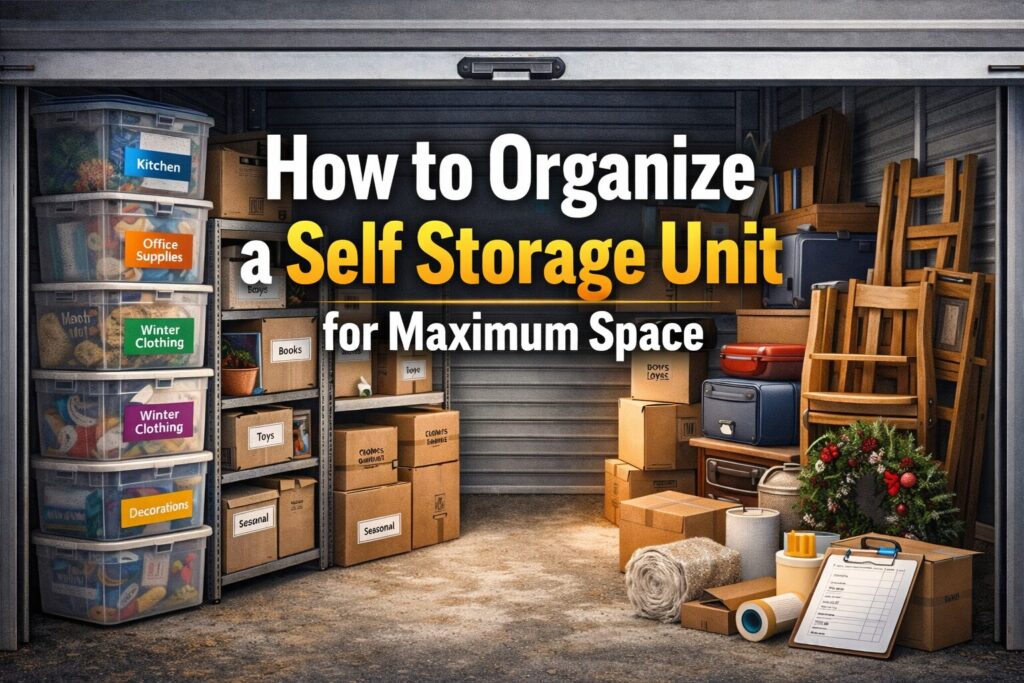
Self storage units are an excellent solution when you need extra room for household items, furniture, or business inventory. However, without proper organization, even a large storage unit can quickly become cluttered and inefficient. Knowing How to Organize a Self Storage Unit for Maximum Space can help you store more items, access them easily, and keep everything in good condition.
A well-organized storage unit saves time, reduces stress, and prevents damage to your belongings. Instead of stacking items randomly, strategic planning allows you to maximize both vertical and horizontal space.
In this guide, you’ll learn practical tips and smart strategies to organize your storage unit like a professional.
Introduction to Storage Unit Organization
Renting a storage unit is helpful for many situations, such as moving homes, downsizing, renovating, or storing seasonal items. But simply placing boxes inside the unit without a plan can quickly lead to chaos.
Proper organization ensures:
When you apply the right strategies, even a small storage unit can hold a surprising amount of belongings.
Benefits of Organizing Your Storage Unit
Organizing your storage space offers more advantages than many people realize.
Avoiding Damage and Loss
When items are stacked randomly, fragile belongings may break or become buried under heavy boxes. Organized storage ensures that delicate items are protected and properly supported.
It also prevents items from getting lost or forgotten. Without a system, it’s easy to forget what you stored months ago.
Improving Accessibility
Imagine needing a specific box but having to move ten others just to reach it. Organized storage prevents this problem.
With a logical layout and labeling system, you can quickly locate items without rearranging the entire unit.
Plan Before You Move Items Into Storage
Planning is the most important step in How to Organize a Self Storage Unit for Maximum Space.
Before placing anything in the unit, take time to design your layout.
Create a Storage Inventory List
Write down every item you plan to store. This helps you:
-
Track belongings
-
Plan box placement
-
Identify fragile items
Digital spreadsheets or inventory apps can make this process easier.
Measure Your Storage Unit
Knowing the dimensions of your unit allows you to plan how items will fit.
Consider:
Planning ahead prevents inefficient stacking later.
Choose the Right Storage Containers
The containers you choose greatly impact how efficiently you use storage space.
Plastic Bins vs Cardboard Boxes
| Container Type |
Advantages |
Disadvantages |
| Plastic Bins |
Durable, stackable, moisture resistant |
More expensive |
| Cardboard Boxes |
Affordable, lightweight |
Can collapse over time |
For long-term storage, plastic containers are usually the better choice because they protect items from moisture and pests.
Use Vertical Space Effectively
One of the biggest mistakes people make is ignoring vertical storage space.
Instead of spreading boxes across the floor, stack them safely upward.
Installing Storage Shelves
Shelving units are extremely helpful in storage spaces.
Benefits include:
Metal or plastic shelves work well because they resist moisture.
Create Clear Walkways
A common professional storage strategy is the center aisle layout.
The Center Aisle Strategy
Leave a walkway down the middle of the storage unit so you can reach items on both sides.
This simple method:
Think of your storage unit like a mini warehouse.
Label Everything Clearly
Clear labeling can save hours of searching later.
Color Coding Boxes
Use color labels to organize categories such as:
This visual system makes it easy to locate items quickly.
Store Frequently Used Items in Front
Not everything in your storage unit is needed at the same time.
Seasonal Item Rotation
Items you use often should stay near the front of the unit.
Examples include:
-
Holiday decorations
-
Business inventory
-
Important documents
-
Seasonal clothing
Items used rarely can be stored toward the back.
Protect Fragile and Valuable Items
Proper protection is essential when storing fragile belongings.
Proper Padding and Wrapping
Use materials such as:
-
Bubble wrap
-
Packing paper
-
Furniture blankets
-
Foam sheets
These materials help prevent scratches, dents, and breakage.
Avoid placing heavy boxes on top of fragile items.
Disassemble Large Furniture
Large furniture pieces consume a lot of space when stored fully assembled.
Storing Furniture Safely
Whenever possible, disassemble items such as:
-
Bed frames
-
Tables
-
Shelving units
Store screws and hardware in labeled bags attached to the furniture.
This simple step can free up a significant amount of storage space.
Use Hidden Storage Areas
Many people overlook small storage opportunities.
Storing Items Inside Furniture
You can store smaller items inside:
-
Dressers
-
Cabinets
-
Suitcases
-
Washing machines
-
Refrigerators
This strategy helps maximize available space without adding more boxes.
Maintain Your Storage Unit
Organization should not end after you fill the unit.
Regularly check your storage unit to:
Maintaining order keeps your storage system efficient over time.
Frequently Asked Questions
1. What is the best layout for a storage unit?
The center aisle layout is the most effective because it allows access to items without moving everything.
2. Should heavy boxes go on top or bottom?
Heavy boxes should always be placed on the bottom to prevent crushing lighter items.
3. Are shelves necessary in a storage unit?
Shelves are not required but highly recommended for maximizing vertical space.
4. Can I store furniture upright to save space?
Yes, some furniture like mattresses and sofas can be stored vertically to conserve space.
5. How do I protect items from moisture in storage?
Use sealed plastic containers and moisture absorbers such as silica gel or desiccants.
6. Is climate-controlled storage necessary?
Climate-controlled units are ideal for electronics, documents, wood furniture, and delicate items.
Conclusion
Learning How to Organize a Self Storage Unit for Maximum Space allows you to store more belongings while keeping everything safe and accessible. By planning your layout, using proper containers, labeling items clearly, and taking advantage of vertical storage, you can transform a cluttered unit into an efficient storage system.
With these practical strategies, your storage unit will remain organized, easy to navigate, and capable of holding far more than you might expect.