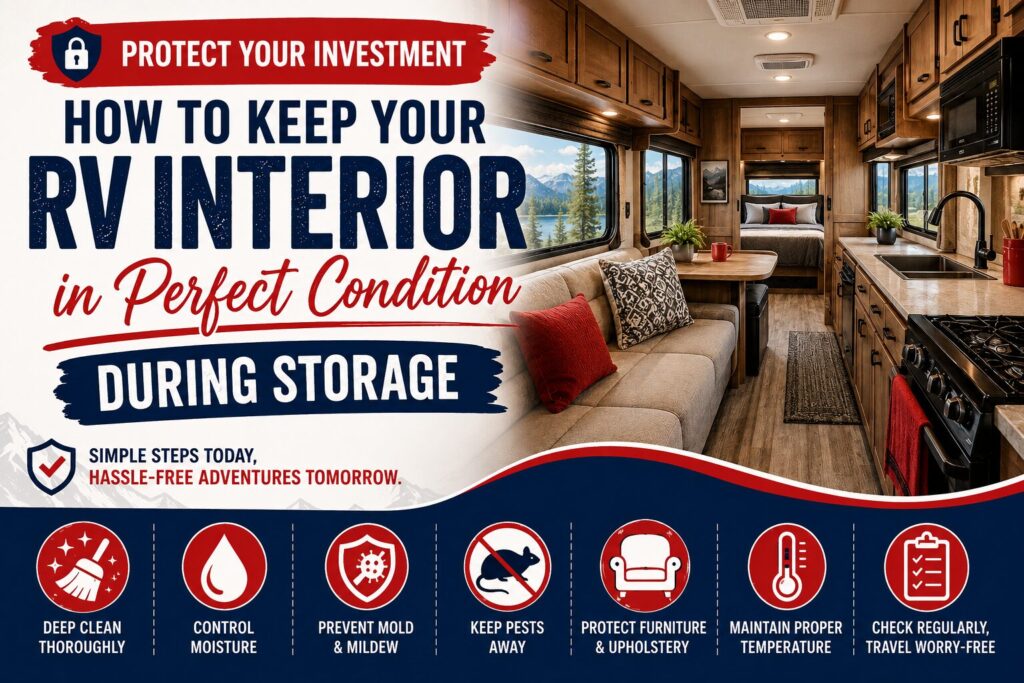
How to Keep Your RV Interior in Perfect Condition During Storage
Owning an RV is an exciting investment that offers freedom, adventure, and unforgettable travel experiences. However, when camping season ends or your vehicle sits unused for weeks or months, knowing How to Keep Your RV Interior in Perfect Condition During Storage becomes extremely important.
Improper storage can lead to mold growth, unpleasant odors, pest infestations, faded furniture, cracked materials, and costly repairs. Fortunately, with the right preparation and maintenance routine, you can preserve your RV’s interior and keep it looking like new for years.
This detailed guide explains everything you need to know about protecting your RV interior during storage, whether you store it for winter, summer, or long-term use.
Why Proper RV Interior Storage Matters
Many RV owners focus on protecting the exterior but forget that the inside of the vehicle is equally vulnerable. Temperature changes, humidity, and inactivity can silently damage upholstery, flooring, cabinets, electronics, and appliances.
Proper interior storage helps:
- Preserve resale value
- Prevent mold and mildew
- Avoid pest infestations
- Keep furniture fresh and clean
- Protect expensive electronics
- Reduce repair costs
- Extend the lifespan of interior materials
A well-maintained RV interior also makes future trips easier because you won’t need extensive cleaning or repairs before traveling again.
Clean the RV Thoroughly Before Storage
One of the most important steps in How to Keep Your RV Interior in Perfect Condition During Storage is performing a deep cleaning before parking it.
Dirt, crumbs, grease, and moisture create the perfect environment for bacteria, insects, and mold.
Remove Food and Perishables
Even small crumbs can attract rodents and insects. Empty your RV completely before storage.
Remove:
- Fresh food
- Canned goods
- Snacks
- Pet food
- Beverages
- Spices
Don’t forget hidden storage compartments and kitchen drawers.
After removing food:
- Wipe shelves
- Vacuum cabinets
- Sanitize countertops
- Empty trash bins
Leaving food inside the RV is one of the biggest causes of pest infestations.
Clean Appliances and Surfaces
Kitchen appliances can trap moisture and odors if not cleaned properly.
Be sure to:
- Defrost the refrigerator
- Leave fridge doors slightly open
- Clean the microwave
- Sanitize sinks
- Wipe shower walls
- Dry all surfaces completely
For upholstery and carpets:
- Vacuum thoroughly
- Spot-clean stains
- Shampoo carpets if needed
- Wash removable fabrics
Using gentle RV-safe products helps protect delicate materials from damage.
For additional RV maintenance recommendations, visit Go RVing.
Control Moisture Inside the RV
Moisture is the biggest enemy of RV interiors. Even a small amount of trapped humidity can lead to mildew, wood damage, and musty odors.
Use Moisture Absorbers
Moisture absorbers help reduce humidity levels inside enclosed spaces.
Popular options include:
- Silica gel packs
- Charcoal moisture absorbers
- Calcium chloride containers
- Electric dehumidifiers
Place them in:
- Bathrooms
- Closets
- Kitchen areas
- Under beds
- Storage compartments
Replace or empty them regularly for maximum effectiveness.
Improve Ventilation
Air circulation is essential during RV storage.
Open roof vents slightly if your storage area is covered and secure. Vent covers can protect against rain while allowing airflow.
Additional ventilation tips:
- Crack windows slightly
- Use vent fans occasionally
- Avoid sealing the RV completely airtight
Fresh airflow prevents condensation buildup inside the cabin.
Protect Upholstery and Furniture
RV furniture is constantly exposed to temperature fluctuations, sunlight, and humidity.
Without protection, cushions and fabrics can fade, crack, or develop odors.
Use Protective Covers
Cover furniture with breathable materials instead of plastic.
Good options include:
- Cotton sheets
- Fabric furniture covers
- RV seat protectors
Avoid airtight plastic coverings because they trap moisture.
If possible:
- Close blinds and curtains
- Use UV-blocking shades
- Keep sunlight away from leather and vinyl surfaces
Avoid Permanent Cushion Damage
Cushions can flatten or deform during long-term storage.
To prevent damage:
- Stand cushions upright
- Rotate them occasionally
- Avoid placing heavy items on seating areas
This helps maintain shape and airflow around fabric materials.
Prevent Mold and Mildew Growth
Mold can spread quickly in enclosed RVs, especially in humid climates.
Learning How to Keep Your RV Interior in Perfect Condition During Storage means understanding how mold forms and how to stop it early.
Common Areas Mold Attacks
Inspect these high-risk areas carefully:
- Bathroom corners
- Window seals
- Under mattresses
- Around plumbing
- Ceiling vents
- Storage compartments
Signs of mold include:
- Black spots
- Musty smells
- Damp surfaces
- Discoloration
How to Prevent Mold
Preventative measures include:
- Keeping humidity low
- Cleaning spills immediately
- Drying wet fabrics
- Running a dehumidifier
- Checking for leaks before storage
If mold appears:
- Clean it immediately
- Use RV-safe mold cleaners
- Dry affected areas thoroughly
Ignoring mold can cause health issues and structural damage.
Keep Pests and Rodents Away
Rodents can destroy RV interiors by chewing wires, upholstery, and insulation.
Seal Entry Points
Inspect the RV exterior for openings.
Common entry points:
- Plumbing holes
- Cable openings
- Roof gaps
- Undercarriage spaces
- Slide-out seals
Use:
- Steel wool
- Expanding foam
- Rubber sealant
Blocking small gaps greatly reduces pest access.
Safe Pest Deterrents
Effective pest prevention methods include:
- Peppermint oil
- Dryer sheets
- Rodent repellent packs
- Ultrasonic deterrents
Avoid placing poison inside the RV because dead rodents can create severe odors.
You should also:
- Remove all food
- Clean crumbs thoroughly
- Empty water tanks if needed
Protect Electronics and Appliances
Electronics can suffer from moisture, power surges, and extreme temperatures.
Before storage:
- Unplug appliances
- Remove batteries from remotes
- Shut off unnecessary power
- Disconnect electronics safely
Sensitive electronics include:
- TVs
- GPS systems
- Coffee makers
- Microwaves
- Entertainment systems
If storing in freezing temperatures, remove valuable electronics entirely when possible.
Maintain Proper Temperature Conditions
Temperature extremes can damage interior materials.
Hot temperatures may:
- Crack leather
- Warp plastics
- Fade fabrics
- Damage adhesives
Cold temperatures may:
- Freeze plumbing
- Cause condensation
- Create moisture buildup
Best Storage Temperature Tips
Whenever possible:
- Store indoors
- Use climate-controlled facilities
- Park in shaded areas
- Use reflective window covers
Indoor RV storage provides the best protection for interior longevity.
Use RV-Safe Cleaning Products
Harsh household cleaners can damage RV surfaces.
Avoid:
- Bleach on fabrics
- Abrasive scrubbers
- Strong ammonia products
- Oil-heavy sprays
Instead, use:
- RV-specific cleaners
- Mild soap solutions
- Microfiber cloths
- Non-abrasive disinfectants
Safe cleaning products help preserve finishes, flooring, and upholstery.
Check the RV Periodically During Storage
Many owners store their RV and ignore it for months. This can allow small issues to become expensive problems.
Inspect your RV every few weeks if possible.
Monthly RV Inspection Checklist
Check for:
- Moisture buildup
- Pest activity
- Mold growth
- Battery condition
- Water leaks
- Unusual odors
Also:
- Run ventilation fans briefly
- Start appliances occasionally
- Reposition cushions
- Empty dehumidifiers
Routine inspections help catch issues early.
Mistakes to Avoid During RV Storage
Avoiding common mistakes is critical when learning How to Keep Your RV Interior in Perfect Condition During Storage.
Common Storage Errors
Leaving Food Behind
This attracts insects and rodents quickly.
Ignoring Moisture
Humidity silently destroys interiors over time.
Skipping Cleaning
Dirt and stains become harder to remove later.
Closing the RV Airtight
Poor airflow encourages mold growth.
Using Harsh Chemicals
Strong cleaners may damage sensitive RV materials.
Forgetting Routine Inspections
Small leaks or pest problems can worsen rapidly.
Benefits of Proper RV Interior Maintenance
Taking time to protect your RV interior offers major long-term rewards.
Financial Benefits
- Higher resale value
- Fewer repairs
- Longer appliance lifespan
- Reduced pest-control costs
Comfort Benefits
- Fresh-smelling interior
- Cleaner living space
- Better travel readiness
- Reduced stress before trips
Longevity Benefits
- Preserved upholstery
- Better flooring condition
- Mold-free cabinets
- Protected electronics
Consistent maintenance can add years to your RV’s interior life.
Frequently Asked Questions
How often should I check my RV during storage?
Ideally, inspect your RV once every 2–4 weeks. Regular checks help detect moisture, pests, and leaks early.
Should I leave RV windows open during storage?
Slightly cracking windows can improve airflow, but only if your RV is stored in a secure, covered location.
What is the best way to prevent moisture inside an RV?
Use dehumidifiers or moisture absorbers and maintain proper ventilation to reduce humidity levels.
Can mold grow in stored RVs?
Yes. Mold commonly develops when moisture becomes trapped inside enclosed RV spaces.
Do dryer sheets keep mice away from RVs?
Dryer sheets may help temporarily, but they are not fully reliable. Combining multiple deterrent methods works better.
Should I remove cushions during long-term storage?
You can remove them or stand them upright to improve airflow and prevent flattening.
Conclusion
Understanding How to Keep Your RV Interior in Perfect Condition During Storage is essential for protecting your investment and ensuring your RV remains comfortable, clean, and road-ready.
By cleaning thoroughly, controlling moisture, preventing pests, protecting furniture, and inspecting the RV regularly, you can avoid many costly problems that occur during storage.
A little preparation today can save you significant money, time, and frustration later. Whether you store your RV for a few weeks or several months, these maintenance practices will help keep your interior looking fresh and functioning properly for years to come.