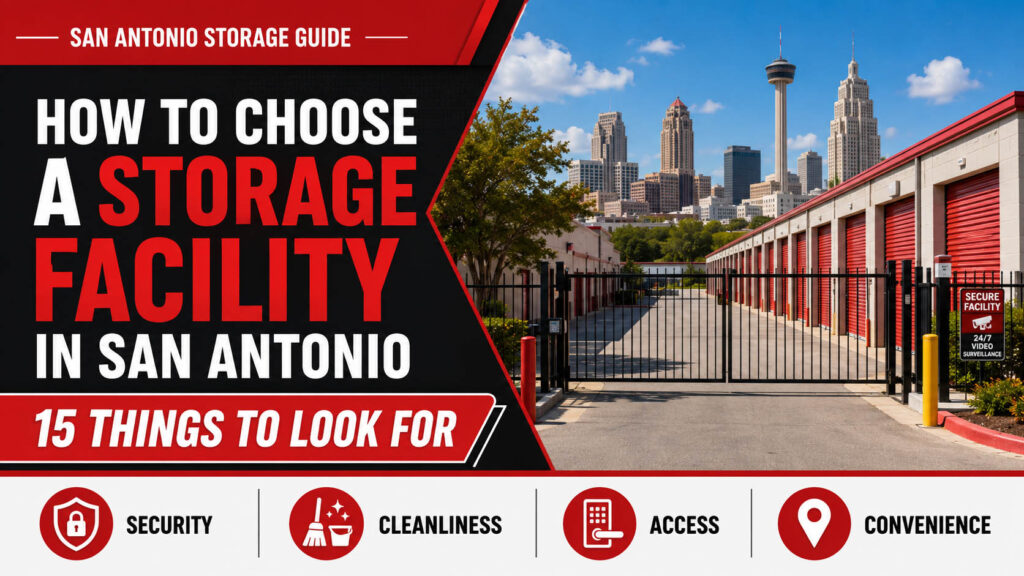
Choosing a storage facility may seem as simple as finding the closest available space and comparing monthly prices. However, the facility you select can affect the security, condition, accessibility, and long-term protection of everything you store.
This decision becomes even more important when you need storage for a valuable recreational vehicle, boat, trailer, or other large property. These vehicles require enough room to park safely, suitable clearance, dependable access, and protection from San Antonio’s intense sun and unpredictable weather.
Before signing a rental agreement, take time to compare facilities, ask detailed questions, and visit the property whenever possible. A low advertised price may not provide much value if the facility is difficult to access, the space is too small, or the property does not offer the features you need.
This guide explains how to choose a storage facility in San Antonio and identifies 15 important things to evaluate before renting a space.
Look for a conveniently located storage facility that offers appropriately sized spaces, controlled property access, adequate lighting, clearly defined security measures, reasonable access hours, good drainage, and transparent rental terms.
If you are storing an RV, boat, or trailer, also evaluate canopy clearance, drive-aisle width, turning space, parking-surface conditions, electrical availability, and protection from the South Texas climate. Visit the facility before renting and confirm that your vehicle’s complete dimensions will fit comfortably.
A storage facility temporarily becomes the home of your belongings or vehicle. Although renters are still responsible for preparing, maintaining, and insuring their property, the facility’s condition and policies influence the overall experience.
Choosing carefully can help you:
San Antonio has a wide range of storage options, from small indoor units to large outdoor and covered spaces. Your best choice will depend on what you are storing, how often you need access, and how much protection you want.
Location should be one of the first factors you consider. The most affordable facility will not necessarily be the best value if it is inconvenient to reach.
For household items you rarely need, a facility farther from home may be manageable. For an RV, boat, work trailer, or vehicle you use regularly, convenience becomes more important.
Consider the facility’s proximity to:
If you regularly tow a travel trailer or boat, inspect the roads leading to the facility. Narrow lanes, low branches, steep entrances, tight corners, or heavy traffic can make every visit more difficult.
A conveniently located San Antonio storage facility can save time whenever you prepare for a trip, pick up equipment, or return after a long day of travel.
Storage facilities offer different types of spaces. Understanding these options will help you avoid paying for protection you do not need—or selecting a space that does not provide enough protection.
Indoor storage units are commonly used for furniture, boxes, business documents, seasonal decorations, and household property. They generally provide better protection from direct sunlight and rain than outdoor spaces.
Ask whether the unit is climate-controlled or simply enclosed. These terms do not mean the same thing.
Outdoor storage usually provides an assigned parking space for a car, boat, trailer, or recreational vehicle. It is often the most affordable vehicle-storage option, but the property remains exposed to sunlight, rain, hail, and debris.
Covered storage places the vehicle beneath a roof or canopy. This can be especially valuable in San Antonio because it reduces direct exposure to intense sunlight and provides some protection from rain, hail, and falling debris.
Enclosed storage offers the most separation from outdoor conditions. However, it is typically more expensive and may have limited availability for large motorhomes, fifth wheels, or boats.
Choose the level of protection that makes sense for the value of your property, the expected storage period, and your budget.
Never rent a storage space based on an estimate. Measure what you plan to store and confirm the unit’s actual dimensions.
For household storage, consider the floor area and vertical space. For an RV, boat, or trailer, measure the complete length, width, and height.
Vehicle measurements should include permanently attached equipment such as:
A travel trailer advertised as 30 feet long may require a longer parking space once the tongue, bumper, spare tire, and rear accessories are included.
If you are considering covered or enclosed storage, height clearance is critical. Allow room above the tallest rooftop component rather than selecting a space with only a minimal margin.
A parking space may be technically large enough for your vehicle while still being difficult to use. The surrounding layout matters just as much as the assigned dimensions.
When visiting a facility, evaluate:
Large fifth wheels, motorhomes, boats, and travel trailers need generous maneuvering space. If possible, bring your RV or tow vehicle to the facility before signing an agreement.
Think about whether you could safely park after dark, in light rain, or when neighboring spaces are occupied. A well-designed layout can make storage much more convenient.
Ask how tenants enter and exit the facility. Controlled access helps limit unnecessary traffic and allows the property manager to determine who is authorized to enter.
A facility may use:
Ask whether access activity is logged and how codes or credentials are handled when a tenant moves out.
Controlled access does not guarantee that theft or damage will never occur. It should be viewed as one component of the facility’s broader approach to property management and security.
Security is often one of the biggest concerns when choosing a storage facility. Ask the manager to explain the measures in place instead of relying only on general words such as “secure.”
Potential features include:
Find out which areas are monitored and whether cameras cover the entrance, exit, drive aisles, and storage sections.
Tenants should also take personal precautions. Use appropriate locks, remove portable valuables, close window coverings, secure trailer hitches when permitted, and maintain any required insurance coverage.
Good lighting improves visibility and makes it easier to access, inspect, load, or park your property.
This is particularly important if you may visit during early-morning or evening hours. Poor lighting can make it difficult to spot obstacles, align a trailer, read access controls, or inspect a vehicle for damage.
Look at lighting near:
Visit after sunset if evening access is important to you. A facility that appears adequately lit during the day may feel very different at night.
Not all storage facilities provide 24-hour access. Some have established daily hours, while others limit entry on holidays or during certain overnight periods.
The right schedule depends on how you plan to use the space. If you are storing furniture or archived documents, standard daytime access may be enough. If you frequently leave early for RV or boating trips, you may need access outside normal business hours.
Ask the following questions:
Make sure the schedule supports your real routine instead of assuming you can enter whenever you want.
San Antonio storage facilities must contend with intense sunlight, high temperatures, heavy rain, strong winds, hail, humidity, and occasional freezing weather.
The right level of protection depends on what you are storing.
Prolonged UV exposure can fade paint, dry rubber seals, deteriorate tires, and damage vehicle graphics. Extreme heat may also affect sensitive belongings stored in non-climate-controlled units.
Inspect indoor units for signs of past water intrusion, such as stains, warped materials, musty odors, rust, or damaged walls. For outdoor spaces, evaluate the property’s drainage and elevation.
Covered vehicle storage may help reduce exposure to hail, branches, and airborne debris. It will not prevent every type of storm damage, but it may provide meaningful additional protection.
Although hard freezes are less frequent than extreme heat, they can still affect RV plumbing systems, boat components, and temperature-sensitive belongings.
Ask how the facility is designed to address local conditions, but remember that you remain responsible for properly preparing your property.
If you are storing a vehicle, boat, or RV, inspect the parking surface. It should offer adequate support and remain usable after heavy rain.
Common surfaces include:
Paved surfaces can reduce mud and make it easier to inspect the area beneath a vehicle. Properly maintained gravel may also provide good drainage and support.
Look for low areas, standing water, deep ruts, erosion, loose debris, and signs that heavy vehicles sink into the ground.
Drainage is also important for indoor storage. Ask whether the unit has ever experienced water intrusion and whether the floor is elevated relative to the surrounding drive aisle.
The overall condition of a facility often reveals how actively it is managed. A clean, orderly property suggests that staff regularly inspect and maintain common areas.
During your visit, look for:
No outdoor property will remain spotless at all times, especially after storms. However, widespread neglect can create inconvenience and may indicate that other problems are not being addressed promptly.
For indoor units, check corners, ceilings, doors, and surrounding hallways for evidence of insects or rodents. Ask about the facility’s pest-control practices, but continue using sealed containers and other preventive measures.
Some RV and vehicle storage facilities offer access to electrical outlets. This may be useful for approved battery-maintenance equipment or other limited purposes.
Never assume that a visible outlet is included with your space or available for continuous use.
Ask about:
You may also want to ask whether the facility offers:
Amenities can be convenient, but they should not distract from core considerations such as space, access, location, maintenance, and security.
The advertised monthly rate may not represent the total cost of renting a storage space. Ask for a complete explanation of charges before signing.
Potential additional costs include:
Ask whether the advertised price is an introductory promotion and, if so, when it expires. Find out how often rates may change and how tenants are notified.
A trustworthy facility should be willing to explain its pricing and provide the rental terms in writing.
Compare overall value instead of selecting a facility solely because it has the lowest initial rate. A more convenient location, better-sized space, or covered parking may justify a higher monthly cost.
Read the rental agreement completely. Storage contracts establish the responsibilities of the tenant and the facility, including payment requirements, prohibited activities, insurance obligations, and move-out procedures.
Pay attention to:
If you are storing an RV or boat, ask whether you may perform repairs, wash the vehicle, run the engine, extend slide-outs, or connect to electricity. Many facilities limit these activities for safety, environmental, and operational reasons.
Get clarification before signing if any part of the agreement is unclear.
Facility management can significantly affect your experience. The manager should be able to explain space dimensions, access procedures, rates, security measures, rental terms, and property rules.
Pay attention to how your questions are handled. Helpful management should provide clear answers without pressuring you to sign immediately.
Ask how tenants report:
You may not interact with management frequently, but responsive assistance becomes valuable when a problem arises.
A personal visit can reveal issues that may not appear in online descriptions or photographs.
Possible warning signs include:
One minor maintenance issue does not always mean the facility is unsuitable. Look at the overall condition and how management responds when you raise a concern.
Create a simple comparison list before contacting facilities. Use the same questions for each location so you can make a fair evaluation.
Your comparison should include:
For RV or boat storage, add clearance height, drive-aisle width, gate width, and turning space.
Taking notes during each visit can prevent facilities from blending together when it is time to decide.
Even the best facility cannot replace proper preparation. Before storing household items, use durable containers, label each box, protect furniture, and avoid storing prohibited or perishable materials.
Before storing an RV, boat, trailer, or vehicle:
Visit the stored property periodically. Regular inspections can help you identify tire problems, pest activity, water intrusion, battery issues, or weather damage before they become more serious.
Covered RV storage can be especially valuable in San Antonio because it reduces direct exposure to UV rays, heat, rain, hail, and falling debris. Whether it is worth the cost depends on your RV’s value, how long it will be stored, and the level of protection you prefer.
Coverage varies by facility. Some may require proof of insurance, while others may offer or require a separate protection plan. Review the terms carefully and contact your insurance provider to confirm what your existing policy covers while the property is in storage.
Many facilities prohibit or restrict repairs, washing, fluid changes, and other maintenance. Ask about permitted activities before renting.
Measure the complete length, width, and height of everything being stored. For RVs, boats, and trailers, include hitches, tongues, bumpers, ladders, rooftop equipment, swim platforms, and attached accessories.
Convenience is important, but the closest facility is not automatically the best. Compare its space sizes, access hours, security features, weather protection, property condition, and rental terms with other nearby options.
The best storage facility is one that fits your property, schedule, budget, and expectations. It should provide the right amount of space, practical access, suitable protection, and clear rental terms.
Do not make the decision based on price alone. Measure your property, visit the facility, inspect the surroundings, and ask specific questions. If you are storing an RV, boat, or trailer, pay close attention to clearance, maneuvering room, parking surfaces, drainage, and exposure to the South Texas climate.
San Antonio RV & Boat Storage provides dedicated storage options for recreational vehicle and boat owners in the San Antonio area. Contact the facility to ask about current availability, space dimensions, access policies, features, and pricing.
Finding the right storage facility now can make every future trip easier while helping you protect your valuable RV, boat, trailer, or other property between adventures.
Apartment Living Boat and RV Storage Boat Storage Boat Storage Facility Business Storage Covered RV Storage Decluttering Your Home Downsizing Your Home First-Time First-Time Storage Mistakes Garage Storage journey Locally Owned Storage Facilities Local Storage Facility Long-Term Storage Tips Moving to San Antonio Owner’s Guide Pest Prevention Tips Prepare Your RV Preparing Your RV Prevent Mold & Mildew Protect Your RV Renting Storage Units RV Interior RV products RV Storage RV Storage Cost San Antonio RV San Antonio RV & Boat Storage Self Storage Self Storage for Estate Cleanouts Self Storage Solution Self Storage Solutions storage Storage Renters Storage Solutions for Contractors Storage Tips for Military Families storage unit Storage Units Storage Units for Business Texas weather Tips for First-Time Storage Renters U-Haul Trailer Rentals Ultimate Guide to RV Value of Self Storage
Ready to secure your RV or boat? At San Antonio RV, Boat, and Self Storage, we make booking simple and straightforward. Our clean and secure facilities offer everything you need for your storage needs. Don’t wait any longer—lock in your space now!