



Looking for a reliable place to store your RV or boat in San Antonio? San Antonio Boat & RV Storage offers secure, affordable, and accessible storage solutions just minutes from your next adventure.

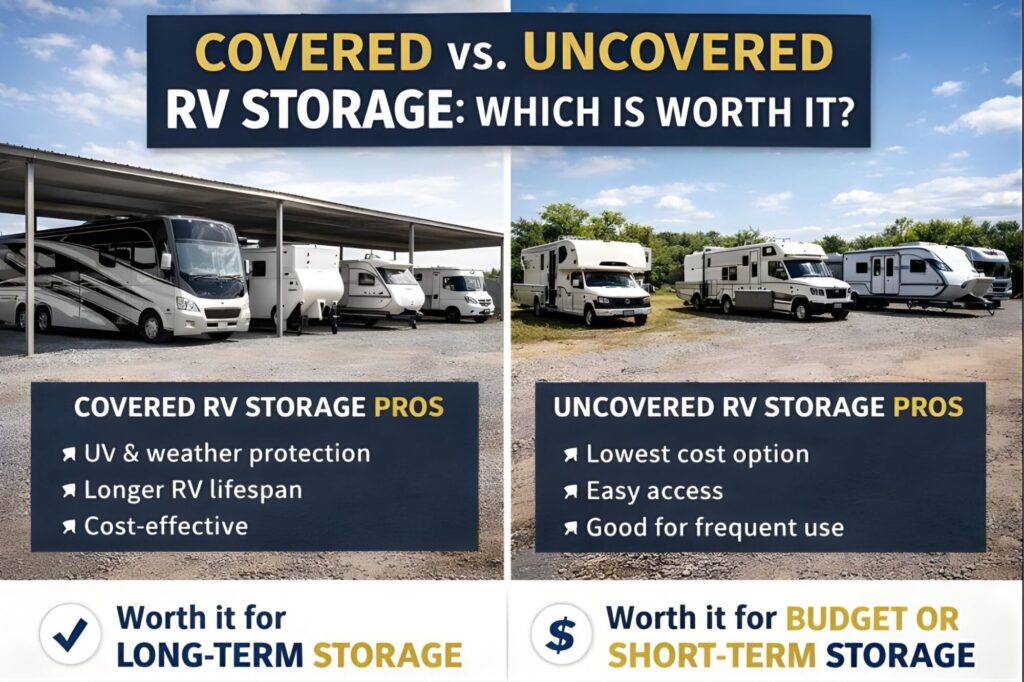
Owning an RV opens the door to freedom, travel, and adventure. But when your RV isn’t on the road, how you store it matters more than many owners realize. The debate over Covered vs. Uncovered RV Storage: Which Is Worth It?comes down to protection, cost, climate, and how often you use your rig.
This in-depth guide breaks down both options clearly, helping you decide which RV storage solution truly delivers value for your situation.
RVs are exposed to the elements more than standard vehicles. Sun, rain, wind, dust, hail, and temperature swings all take a toll on:
Roof membranes and seals
Paint and decals
Tires and suspension
Interior materials and electronics
The right storage option can extend your RV’s lifespan by years while reducing repair and maintenance costs.
Covered RV storage provides a roof or canopy over your RV while leaving the sides open. These structures are commonly metal or fabric canopies designed specifically for oversized vehicles.
Overhead protection from sun, rain, and hail
Open airflow to reduce moisture buildup
Designated RV-sized parking spaces
Covered storage is often viewed as the “middle ground” between full indoor storage and open parking.
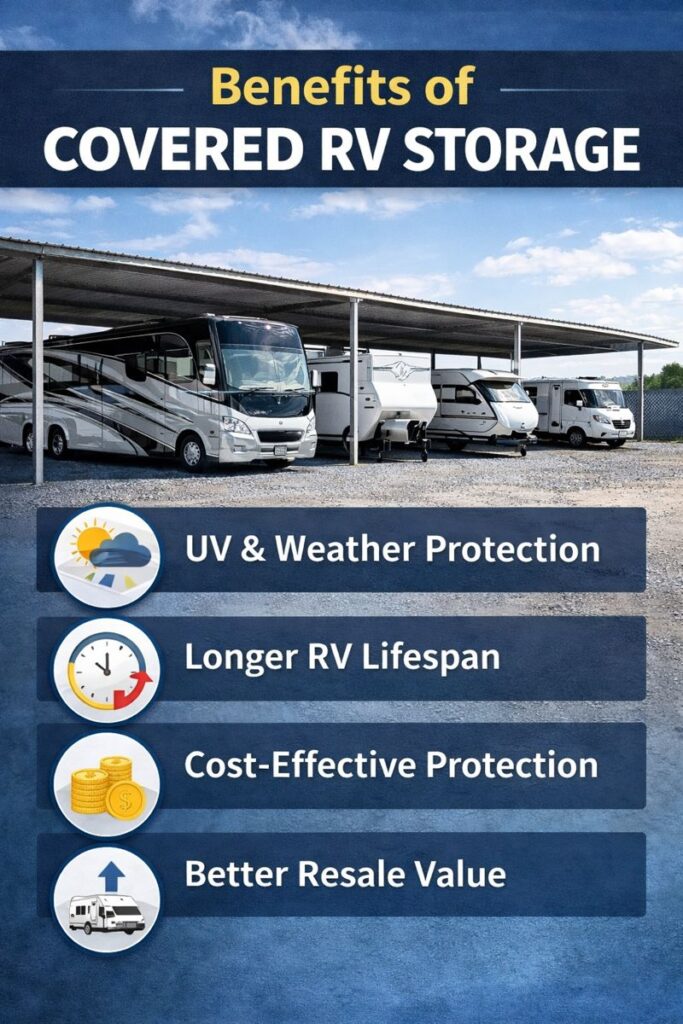
Constant sun exposure can fade paint, crack seals, and weaken roof materials. Covered storage blocks direct sunlight and reduces weather-related damage.
By limiting environmental stress, covered storage helps preserve your RV’s exterior, roof, and tires over time.
While more expensive than uncovered storage, covered options cost significantly less than indoor storage.
Well-maintained exteriors and intact decals can boost resale or trade-in value down the road.
Higher monthly cost than uncovered storage
Partial exposure to wind-driven rain and dust
Limited availability in some locations
Uncovered RV storage places your vehicle in an open, designated space—usually within a fenced and secured lot.
No roof or overhead structure
Basic security such as gates and cameras
Wide access for large RVs
This option is popular for budget-conscious owners or short-term storage needs.
Uncovered storage is the most affordable RV storage solution, often costing 30–50% less than covered options.
Open lots typically offer wider drive lanes and flexible access hours, making pickups and drop-offs simple.
If you use your RV weekly, uncovered storage may be practical since long-term exposure is limited.
Full exposure to sun, rain, hail, and debris
Faster wear on roof, seals, and tires
Greater reliance on RV covers for protection
| Feature | Covered RV Storage | Uncovered RV Storage |
|---|---|---|
| Weather Protection | Moderate | Minimal |
| UV Protection | High | None |
| Monthly Cost | Medium | Low |
| Maintenance Reduction | Yes | Limited |
| Long-Term Storage | Ideal | Not recommended |
| Short-Term Storage | Good | Excellent |
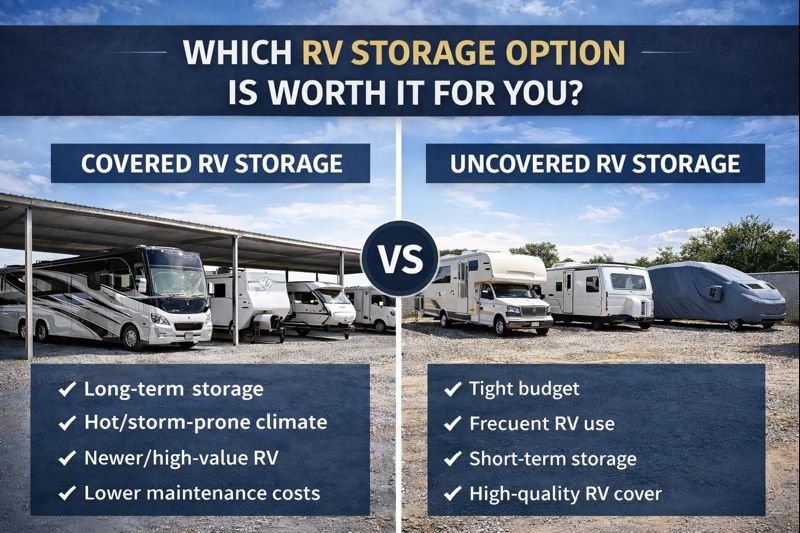
You store your RV long-term
You live in a hot or storm-prone climate
Your RV is newer or high-value
You want lower maintenance costs
You’re on a tight budget
You use your RV frequently
You store your RV short-term
You plan to use a high-quality RV cover
Regardless of storage type, look for:
Gated access
Surveillance cameras
Well-lit facilities
Ensure the facility can accommodate your RV’s length, height, and slide-outs.
Some insurers offer discounts for covered storage due to reduced risk.
Sun-heavy regions benefit more from covered storage than mild climates.
Choosing price over protection
Ignoring roof and seal damage risks
Assuming uncovered storage is “good enough” long-term
Not factoring resale value
Avoiding these mistakes can save thousands in future repairs.
Yes, especially for long-term storage. It reduces sun and weather damage, lowering maintenance and repair expenses over time.
RV covers help but don’t provide the same level of UV and hail protection as a permanent overhead structure.
Covered storage typically costs 25–50% more than uncovered, depending on location and RV size.
Not necessarily for short-term use, but long-term exposure can accelerate wear on roofs, seals, and tires.
Covered storage generally preserves exterior condition better, helping maintain resale value.
Some allow light maintenance, while others restrict repairs. Always check facility rules first.
There’s no one-size-fits-all answer to Covered vs. Uncovered RV Storage: Which Is Worth It? The best choice depends on your budget, climate, usage frequency, and how long you plan to store your RV.
If long-term protection and lower maintenance matter most, covered RV storage is worth the investment. If affordability and frequent use are your priorities, uncovered storage can still be a practical solution.
Choosing wisely today ensures your RV stays road-ready for years to come.


“Clean facility, the owners are friendly and meet all your needs, have RV supplies onsite. Covered storage available.”

“Secure location; power at covered stalls. Biggest plus on site dump station; most just storage. The owner is nice and friendly, makes you feel like family.”

“Very good service! Family owned and it showed. The owner went above and beyond helping us.”

“Very helpful and knowledgeable and experienced in the RV world, and they also have a lot of stuff that you could buy that’s affordable love the way they have everything set up very happy with the choice. We made to have RV stored there.”


