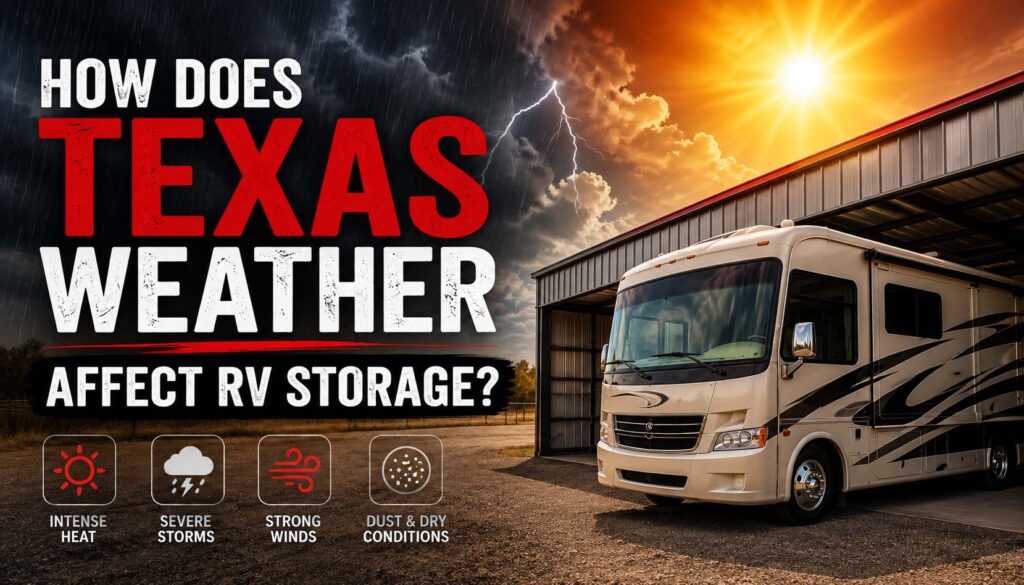
Texas weather can be tough on recreational vehicles. Intense sunlight, triple-digit summer heat, high humidity, severe thunderstorms, hail, strong winds, sudden temperature changes, and occasional freezing conditions can all affect an RV’s exterior, tires, seals, battery, plumbing system, and interior.
Choosing the right RV storage option and preparing your vehicle properly can help reduce weather-related deterioration, prevent avoidable repairs, and keep your RV ready for your next trip.
For RV owners in San Antonio, weather protection should be an important consideration when comparing storage facilities. The lowest-priced space may not offer the access, security, surface conditions, or protection your vehicle needs for long-term storage.
Texas weather can damage an improperly stored RV by causing paint and roof deterioration, cracked seals, tire damage, battery failure, moisture buildup, mold, pest activity, plumbing problems, and storm-related damage. Covered RV storage can reduce direct exposure to sunlight, heat, rain, and hail, while proper preparation and routine inspections provide additional protection.
Before storing your RV in San Antonio, clean and inspect it, protect the roof and seals, inflate and cover the tires, disconnect or maintain the battery, remove food, control interior moisture, and winterize the plumbing when freezing temperatures are possible.
RVs are designed for outdoor travel, but that does not mean they are immune to weather damage. An RV parked in the same position for weeks or months experiences continuous exposure without the airflow, inspections, and maintenance it may receive during regular use.
Texas weather presents several challenges:
San Antonio RV owners may encounter many of these conditions within a single year. A hot and dry period can be followed by heavy rain. A warm winter day can turn into a freezing night. These changes place stress on roofing materials, caulking, seals, tires, batteries, plumbing components, and interior surfaces.
Understanding these risks makes it easier to choose appropriate RV storage and establish a practical maintenance routine.
Sun exposure is one of the most persistent threats to an RV stored outdoors in Texas. Even when temperatures do not seem extreme, ultraviolet radiation can gradually break down exposed materials.
Direct sunlight can fade paint, decals, graphics, awnings, plastic trim, and exterior accessories. Over time, painted or gel-coated surfaces may lose their shine and develop a chalky appearance.
Darker finishes can absorb additional heat, while some decals may shrink, crack, curl, or peel after prolonged exposure.
Washing and applying a product designed to protect the RV’s exterior can help, but reducing direct sun exposure is often more effective than relying on surface treatments alone.
An RV roof receives some of the most intense UV exposure. Depending on its construction, prolonged sunlight can contribute to drying, cracking, or deterioration of the roof membrane and sealants.
The most vulnerable areas are frequently the seams and openings around:
A small crack in the sealant may allow water to enter during the next rainstorm. Because leaks can remain hidden inside walls or ceilings, the damage may become extensive before it is noticed.
Rubber seals around windows, doors, and storage compartments may become brittle when repeatedly exposed to heat and sunlight. Plastic vent covers and trim pieces can also weaken.
Once seals crack or pull away from the surface, rainwater and humid air may enter the RV. Preventive inspections are much less expensive than repairing water-damaged walls, flooring, or cabinetry.
Summer heat in San Antonio can create much higher temperatures inside a closed RV than the outdoor temperature. This trapped heat can affect both the vehicle and the belongings left inside.
Excessive heat may cause adhesives to soften, laminated surfaces to separate, and vinyl materials to crack. Window coverings, upholstery, mattresses, flooring, and decorative panels can also fade or deteriorate.
Items that should not be left inside a hot RV include:
Removing heat-sensitive items before storage helps prevent both property damage and difficult cleanup.
Heat can accelerate battery discharge and shorten battery life. Parasitic electrical loads from alarms, clocks, detectors, and control boards may continue draining the battery even when the RV is not being used.
Depending on the RV, battery type, storage duration, and manufacturer’s instructions, an owner may need to disconnect the battery, use a proper battery-maintenance system, or inspect and recharge it periodically.
Battery terminals should also be checked for corrosion.
Refrigerator seals, plumbing connections, caulking, and rubber components can be affected by repeated heating and cooling. Even when an appliance is turned off, its materials are still exposed to the interior temperature.
Before storage, the refrigerator should generally be emptied, cleaned, dried, and left slightly open to encourage airflow and prevent odors or mold.
Motorized RVs stored for an extended period can experience fuel-related issues. Fuel may degrade, moisture can accumulate, and engine components may suffer when the vehicle sits unused.
Follow the motorhome or chassis manufacturer’s recommendations concerning fuel stabilizers, fluid levels, engine operation, and long-term storage. Starting an engine for only a few minutes may not be sufficient and, in some circumstances, can contribute to condensation.
Yes. Humidity is a major concern because moisture can enter through small openings or remain trapped inside a closed RV. Even when there is no visible roof leak, condensation can form when warm, humid air contacts cooler surfaces.
Mold and mildew can develop on upholstery, mattresses, curtains, carpeting, cabinets, and walls. They are especially likely to grow when an RV is stored without airflow and contains residual moisture.
Signs of an interior moisture problem include:
Using moisture absorbers or an RV-appropriate dehumidification method may help. However, these products are not substitutes for repairing leaks or drying the vehicle thoroughly before storage.
Water intrusion frequently begins near roof penetrations, windows, doors, slide-out seals, or exterior storage compartments. Moisture may travel behind interior panels before it becomes visible.
Regular inspections are critical. After a strong storm, check the roof, ceiling, walls, cabinets, flooring, and storage bays for signs of water.
Moisture can contribute to corrosion on exposed metal parts, battery terminals, electrical connections, frames, steps, and accessories. Keeping the RV clean and addressing damaged coatings can help slow corrosion.
Heavy rain can expose roof and seal problems that were not noticeable during dry weather. It may also create standing water around a poorly drained parking area.
When choosing RV storage in San Antonio, evaluate more than the space itself. Consider the condition of the parking surface and the apparent drainage around the property.
A stable, well-maintained surface can help reduce:
RV owners should also avoid parking in low-lying areas whenever possible. No storage facility can eliminate every weather risk, but proper drainage and site maintenance are important factors in reducing exposure.
Hail can damage an RV’s roof, vents, skylights, air-conditioning covers, solar panels, windows, siding, and exterior accessories. Even relatively small hailstones may crack aged or sun-weakened plastic components.
Large hail can cause significant structural and cosmetic damage.
Covered RV storage may provide valuable protection from direct hail impact. The amount of protection depends on the design, height, orientation, and coverage of the structure, and wind-driven hail can still enter from open sides.
After a severe hailstorm, inspect:
Photograph any damage and contact your insurance provider if necessary.
Texas storms can generate strong winds that affect covers, awnings, roof accessories, antennas, slide toppers, and lightweight exterior components.
Before placing an RV in storage:
A full RV cover must fit correctly and be approved for the vehicle. A loose cover can flap in the wind and rub against the paint, decals, windows, or corners. It may also tear or come loose during a storm.
In an open storage area, avoid leaving grills, chairs, leveling blocks, or other items beside the RV where they can become windblown debris.
San Antonio winters are generally milder than those in northern states, but freezing temperatures can still occur. RV plumbing systems are vulnerable because water expands when it freezes.
Possible freeze damage includes:
If temperatures are expected to fall below freezing, follow the RV manufacturer’s winterization procedure. Depending on the RV and expected conditions, this may involve draining the water system, bypassing the water heater, clearing the lines, and adding RV-safe antifreeze where directed.
Do not assume that a short Texas freeze cannot cause damage. Exposed lines and fittings may freeze quickly, particularly during prolonged cold or windy conditions.
Texas weather can shift rapidly. Materials expand when heated and contract when cooled. Repeated cycles can place stress on joints, seams, fasteners, sealants, and rubber components.
Over time, sealant may:
Inspect seals around the roof, windows, doors, exterior lights, storage compartments, slide-outs, and utility connections. Use only compatible sealants recommended for the RV’s materials and application.
Applying the wrong product can make future repairs more difficult and may fail to create a reliable seal.
Tires can deteriorate even when an RV is not moving. Sunlight, heat, improper inflation, moisture, and the vehicle’s stationary weight can all contribute to aging.
Potential storage-related tire issues include:
Before storage, check tire pressure using the manufacturer’s recommendations. Inspect for cracks, bulges, punctures, unusual wear, and damaged valve stems.
Tire covers can help reduce sunlight exposure. The RV should be parked on a stable surface, and any tire-support products should be appropriate for the vehicle and used according to manufacturer instructions.
Do not judge a tire only by its tread depth. RV tires can age before the tread wears out. Check the tire date code and consult a qualified tire professional when replacement may be necessary.
Heat, cold, rain, and drought can all encourage insects and rodents to seek shelter. A stored RV may offer shade, warmth, nesting materials, and access to food residue.
Pests can damage:
Before storage, remove food, crumbs, pet supplies, paper goods, and scented products. Clean under seats, inside cabinets, and around appliances.
Inspect possible entry points around utility connections, plumbing penetrations, storage compartments, vents, and underbody openings. Any screening or sealing method must preserve necessary ventilation and avoid interfering with appliances or safety systems.
For many owners, covered RV storage offers a useful balance between outdoor parking and fully enclosed storage. It can reduce direct exposure to sunlight, heat, rain, falling debris, and some hail.
Potential benefits include:
Covered storage does not eliminate maintenance. Wind-driven rain, humidity, pests, dust, and temperature changes can still affect the vehicle. However, reducing direct exposure may help preserve the RV and make routine care easier.
The right choice will depend on the RV’s value, size, age, frequency of use, insurance requirements, and the owner’s budget.
Outdoor storage is typically the most straightforward option and may accommodate a wide range of vehicle sizes. It can be suitable for owners who use their RV frequently and are prepared to use protective products and perform routine inspections.
The main disadvantage is full exposure to sun, heat, rain, hail, and wind.
Covered storage provides overhead protection while maintaining the convenience of an outdoor parking space. It is often attractive to Texas RV owners because it reduces direct sun and weather exposure.
Before renting, confirm the structure’s clearance, space width, roof coverage, and whether the RV’s air conditioners or other roof accessories will fit safely.
Enclosed storage may provide the greatest separation from outdoor weather, although availability, access, size, ventilation, and cost vary. Enclosure alone does not guarantee climate control.
Ask whether the unit is climate-controlled, ventilated, individually enclosed, or simply located inside a larger building.
A good storage routine helps protect the RV regardless of the type of space selected.
Remove dirt, bugs, tree sap, bird droppings, road salt, and other contaminants. Allow the vehicle to dry completely before applying protective products or installing a cover.
Look for cracks, gaps, loose sealant, or damaged covers around every roof penetration. Repair problems using compatible materials.
Remove food, trash, and moisture-holding items. Vacuum floors, wipe down surfaces, and clean the refrigerator.
Make sure sinks, showers, appliances, and storage compartments are dry. Use moisture-control products when appropriate and inspect them regularly.
Check inflation, inspect the sidewalls, and use fitted tire covers to reduce UV exposure.
Follow the manufacturer’s guidance for disconnection, charging, or battery maintenance. Do not allow a battery to remain deeply discharged.
For motorhomes, follow the manufacturer’s recommendations for fuel stabilization and long-term engine storage.
Close windows, roof vents, doors, slide-outs, awnings, and compartments. Lock the RV and remove valuables.
Confirm that your policy remains active while the RV is in storage and understand coverage for hail, wind, flooding, theft, vandalism, and personal belongings.
Visit after severe weather and at regular intervals. Look for leaks, pest activity, low tires, battery problems, shifting covers, and exterior damage.
Before signing a rental agreement, ask:
A reputable facility should clearly explain what is and is not provided. Weather protection, security, and insurance are related considerations, but they are not the same. Covered parking does not guarantee protection from every storm, and security systems do not replace the owner’s insurance coverage.
There is no single schedule that fits every RV, but periodic inspections are essential. Check the vehicle more frequently during extreme heat, prolonged rain, freezing conditions, or severe storm season.
You should also inspect it:
During each visit, inspect the roof when it is safe to do so, check interior ceilings and walls, look for pests, test the battery, verify tire pressure, and examine the area beneath the RV for leaks.
A short inspection can identify a small problem before it becomes an expensive repair.
Yes. Extreme heat can affect batteries, tires, adhesives, sealants, vinyl surfaces, electronics, and belongings stored inside. Ventilation, shade, covered storage, and regular inspections can help reduce the risk.
A covered space can reduce direct hail exposure, but it may not block wind-driven hail from every direction. The level of protection depends on the structure and storm conditions.
An RV cover may provide UV, dust, and debris protection when it fits correctly and is designed for the vehicle. A loose or low-quality cover may flap in strong winds and damage the exterior. Always follow the manufacturer’s instructions and the storage facility’s rules.
Yes. Trapped humidity, leaks, and condensation can lead to mold and mildew. Store the RV clean and dry, manage moisture, and inspect it regularly.
Winterization may be necessary when freezing temperatures are forecast. San Antonio can experience freezes, and water left in plumbing components can expand and cause damage.
Tire covers can reduce direct UV exposure. Tires should also be properly inflated, inspected, and parked on a stable surface.
That depends on the RV, its electrical system, the storage facility’s rules, and the equipment being used. Follow the RV and battery manufacturer’s recommendations. Never assume electrical service is available unless the facility confirms it.
There is no single risk for every vehicle. Prolonged sun and heat cause gradual deterioration, while hail, wind, flooding, and freezes can cause sudden damage. A combination of appropriate storage and preventive maintenance offers the best protection.
Texas weather is unpredictable, but your RV storage plan does not have to be. Preparing the vehicle, reducing direct exposure, checking it after severe weather, and selecting a well-maintained storage facility can help protect your investment.
When comparing RV storage in San Antonio, consider more than monthly price. Evaluate the storage options, access, security measures, parking surface, drainage, space dimensions, and overall property condition.
San Antonio RV & Boat Storage provides storage solutions for local RV owners who want a convenient place to keep their vehicles between trips. Contact the team to ask about current availability, space sizes, storage options, access policies, and rental requirements.
Looking for RV storage in San Antonio? Contact San Antonio RV & Boat Storage today to find a space that fits your vehicle and storage needs.
Apartment Living Boat and RV Storage Boat Storage Boat Storage Facility Business Storage Covered RV Storage Decluttering Your Home Downsizing Your Home First-Time First-Time Storage Mistakes Garage Storage journey Locally Owned Storage Facilities Local Storage Facility Long-Term Storage Tips Moving to San Antonio Owner’s Guide Pest Prevention Tips Prepare Your RV Preparing Your RV Prevent Mold & Mildew Protect Your RV Renting Storage Units RV Interior RV products RV Storage RV Storage Cost San Antonio RV San Antonio RV & Boat Storage Self Storage Self Storage for Estate Cleanouts Self Storage Solution Self Storage Solutions storage Storage Renters Storage Solutions for Contractors Storage Tips for Military Families storage unit Storage Units Storage Units for Business Texas weather Tips for First-Time Storage Renters U-Haul Trailer Rentals Ultimate Guide to RV Value of Self Storage
Ready to secure your RV or boat? At San Antonio RV, Boat, and Self Storage, we make booking simple and straightforward. Our clean and secure facilities offer everything you need for your storage needs. Don’t wait any longer—lock in your space now!