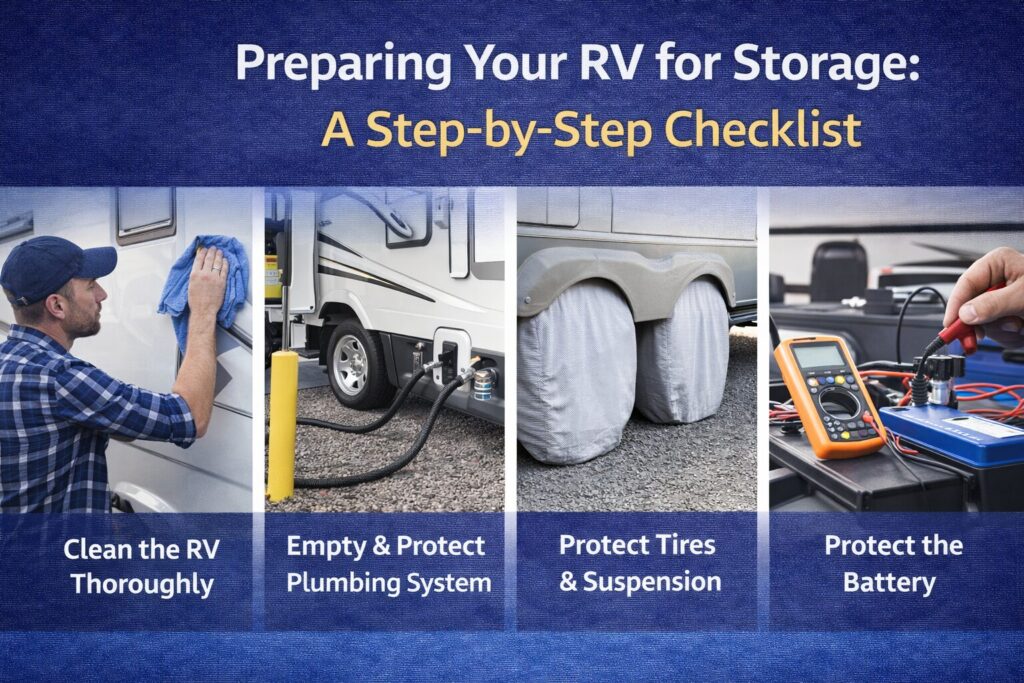
Whether you’re storing your RV for winter, summer heat, or an extended break between trips, proper preparation makes all the difference. Skipping steps can lead to mold, battery failure, tire damage, leaks, and expensive repairs.
This guide to Preparing Your RV for Storage: A Step-by-Step Checklist walks you through exactly what to do—inside and out—so your RV stays safe, secure, and road-ready.
Why Proper RV Storage Preparation Matters
RVs are complex systems on wheels. They include:
When left unused, these components can deteriorate quickly without proper care. A few hours of preparation now can save thousands later.
Step 1: Clean the RV Thoroughly
Cleaning isn’t just about appearance—it prevents long-term damage.
Exterior Cleaning
-
Wash and wax the RV to remove dirt, bugs, and road salt
-
Clean the roof to prevent buildup and staining
-
Inspect seals and caulking while washing
Waxing adds an extra protective layer against UV damage.
Interior Cleaning
-
Remove all food and trash
-
Vacuum floors and upholstery
-
Wipe down countertops and cabinets
-
Defrost and clean the refrigerator
Even small crumbs can attract pests.
Step 2: Empty & Protect the Plumbing System
If storing long-term, plumbing prep is critical.
For Cold Climates
For Warm Climates
Water left sitting can cause odors, bacteria growth, and cracked pipes.
Step 3: Protect the Battery
Battery neglect is one of the most common storage mistakes.
Battery Checklist
-
Disconnect the battery
-
Fully charge before storage
-
Use a trickle charger if available
-
Store in a cool, dry place if removed
A dead battery can shorten lifespan permanently.
Step 4: Stabilize the Fuel System
Fuel degrades over time.
Gas-Powered RVs
Diesel RVs
This prevents fuel system clogs and costly repairs.
Step 5: Inspect & Seal the Exterior
Moisture intrusion causes major damage.
What to Inspect
Reseal cracks immediately to prevent leaks.
Step 6: Protect Tires & Suspension
Tires suffer when sitting idle.
Tire Protection Tips
-
Inflate to recommended PSI
-
Use tire covers to block UV rays
-
Move RV slightly every few weeks if possible
-
Consider leveling blocks to reduce weight pressure
Tire replacement is expensive—protect them.
Step 7: Control Moisture & Ventilation
Trapped moisture leads to mold and mildew.
Moisture Control Checklist
-
Use moisture absorbers inside
-
Install vent covers
-
Leave cabinets slightly open
-
Crack windows slightly if safe
Airflow is key to preventing musty odors.
Step 8: Choose the Right Storage Type
Where you store matters just as much as preparation.
Outdoor Storage
Covered Storage
-
Shields from UV and hail
-
Reduces long-term wear
Indoor Storage
Match storage type to climate and budget.
Step 9: Secure Your RV
Security prevents theft and vandalism.
-
Lock all doors and compartments
-
Remove valuables
-
Use steering wheel or hitch locks
-
Verify gated or monitored storage facility
Peace of mind is priceless.
Quick RV Storage Checklist Summary
✔ Clean interior and exterior
✔ Drain and protect plumbing
✔ Disconnect and maintain battery
✔ Stabilize fuel
✔ Inspect and reseal exterior
✔ Protect tires
✔ Control moisture
✔ Choose proper storage type
✔ Secure all entry points
FAQs: Preparing Your RV for Storage
1. How long can an RV sit without preparation?
Even a few weeks can cause battery drain and moisture buildup.
2. Do I need to winterize in warm climates?
Not fully—but you should still drain tanks and protect plumbing.
3. Should I cover my RV in storage?
Yes, especially for outdoor storage. Use breathable, UV-resistant covers.
4. How often should I check on my stored RV?
Every 30–60 days is ideal.
5. Is indoor storage worth the cost?
For long-term storage or extreme climates, yes.
6. What’s the biggest storage mistake RV owners make?
Skipping moisture control and battery maintenance.
Final Thoughts
Properly Preparing Your RV for Storage: A Step-by-Step Checklist ensures your motorhome stays protected, functional, and ready for your next adventure.
A little preparation today prevents big repairs tomorrow. Treat your RV like the investment it is—and it’ll reward you with years of reliable travel.