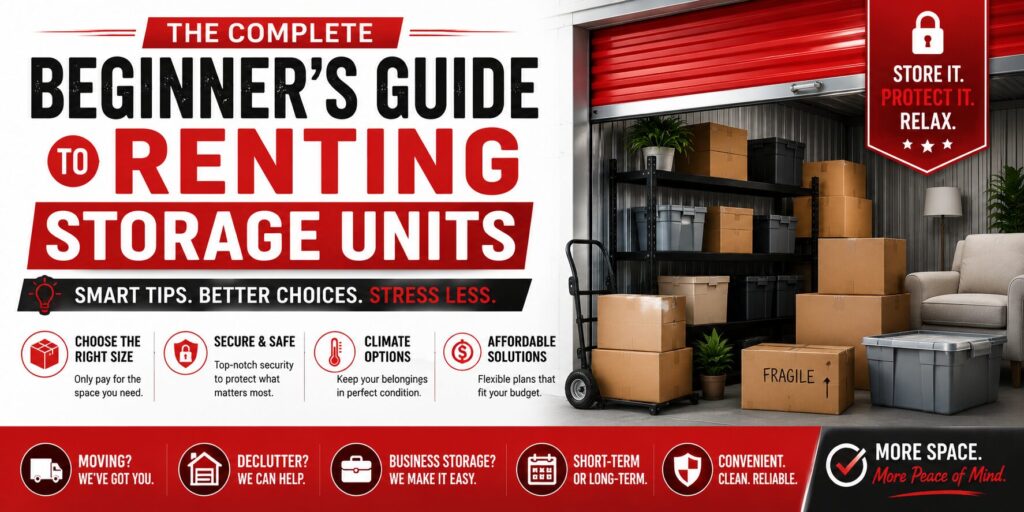
The Complete Beginner’s Guide to Renting Storage Units
Renting a storage unit for the first time can feel overwhelming. With so many sizes, prices, features, and rental options available, beginners often struggle to know where to start. That’s why The Complete Beginner’s Guide to Renting Storage Units is designed to help you make smart, confident decisions before signing a rental agreement.
Whether you are moving, downsizing, organizing your home, or storing business inventory, a storage unit can provide extra space and peace of mind. However, choosing the wrong unit can lead to wasted money, damaged belongings, and unnecessary stress.
This guide covers everything beginners need to know, including storage unit types, pricing, security, packing tips, organization strategies, and common mistakes to avoid.
What Is a Storage Unit?
A storage unit is a secure rental space used to store personal or business belongings temporarily or long term. Storage facilities offer units in different sizes and styles to meet various needs.
Most storage units are rented monthly, giving customers flexibility without long-term commitments.
People commonly use storage units for:
- Furniture storage
- Seasonal items
- Business inventory
- Moving transitions
- Home renovation projects
- Vehicle storage
- College student storage
Modern storage facilities often include advanced security systems, climate control, and convenient access hours.
Why People Rent Storage Units
There are many situations where renting a storage unit becomes extremely useful.
Moving to a New Home
One of the most common reasons people rent storage units is during a move. Storage can help bridge the gap between moving out and moving in.
Benefits include:
- Reduced moving stress
- Temporary furniture storage
- Easier home staging
- Flexible moving schedules
Decluttering and Organization
Many homeowners rent storage units to free up space at home.
Items often stored include:
- Holiday decorations
- Sports equipment
- Extra furniture
- Family keepsakes
Decluttering can improve both organization and mental clarity.
Business and Inventory Storage
Small businesses often use storage units to manage:
- Inventory
- Office supplies
- Equipment
- Documents
- Marketing materials
Storage units provide affordable alternatives to expensive warehouse space.
Temporary Life Changes
Life events such as divorce, military deployment, travel, or college transitions can create temporary storage needs.
Storage units provide flexibility during uncertain periods.
Types of Storage Units
Not all storage units are the same. Understanding your options is important before renting.
Indoor Storage Units
Indoor units are located inside larger buildings.
Advantages:
- Better protection from weather
- Added security
- Cleaner environment
- Temperature stability
These are ideal for delicate household items.
Outdoor Drive-Up Units
Outdoor units allow you to drive directly to the storage door.
Benefits:
- Easy loading and unloading
- Convenient access
- Great for heavy furniture
- Ideal for business equipment
These units are popular for frequent access needs.
Climate-Controlled Storage
Climate-controlled units regulate temperature and humidity levels.
Best for storing:
- Electronics
- Wooden furniture
- Artwork
- Documents
- Musical instruments
- Antiques
Although more expensive, climate-controlled units protect sensitive belongings from extreme weather conditions.
Portable Storage Containers
Portable containers are delivered directly to your location.
Advantages:
- Convenient loading
- Flexible transportation
- Reduced moving hassle
These are useful for home renovations and long-distance moves.
How to Choose the Right Storage Unit Size
Selecting the proper size prevents wasted space and unnecessary costs.
Small Units
Typical sizes:
Best for:
- Boxes
- Small furniture
- Seasonal items
- Personal belongings
Medium Units
Common sizes:
Ideal for:
- One-bedroom apartments
- Appliances
- Office furniture
Large Units
Larger units include:
Suitable for:
- Entire households
- Vehicles
- Business inventory
- Construction equipment
When unsure, it’s often better to choose slightly larger storage space to allow easier access and organization.
Important Features to Look For
Choosing the right facility matters just as much as choosing the right unit.
Security Systems
Strong security features are essential.
Look for:
- Security cameras
- Gated access
- Individual unit alarms
- Bright lighting
- On-site management
Good security reduces theft risks significantly.
Accessibility and Hours
Consider how often you’ll need access to your belongings.
Some facilities offer:
- 24/7 access
- Extended business hours
- App-controlled entry systems
Easy accessibility improves convenience.
Cleanliness and Maintenance
A clean facility often reflects professional management.
Check for:
- Pest control
- Clean hallways
- Dry floors
- Proper lighting
Poor maintenance may lead to damaged belongings.
Insurance Options
Many facilities require renters insurance.
Insurance protects against:
- Theft
- Fire
- Water damage
- Natural disasters
Review coverage carefully before renting.
Understanding Storage Unit Costs
Storage costs vary based on several factors.
Monthly Rental Fees
Pricing depends on:
- Unit size
- Location
- Climate control
- Accessibility
- Demand
Urban locations generally cost more.
Hidden Charges
Always ask about additional fees such as:
- Administrative fees
- Lock purchases
- Insurance costs
- Late payment fees
- Security deposits
Understanding total costs prevents surprises.
Cost-Saving Tips
You can reduce storage expenses by:
- Comparing facilities
- Choosing smaller units
- Sharing space
- Renting during promotions
- Paying long term upfront
Some facilities offer discounts for students, military members, or first-time customers.
Packing Tips for First-Time Storage Renters
Packing correctly helps protect your belongings and maximize space.
Use Strong Boxes
Avoid weak cardboard boxes that collapse easily.
Best options:
- Heavy-duty moving boxes
- Plastic bins
- Waterproof containers
Uniform box sizes stack more efficiently.
Label Everything Clearly
Clear labeling saves time later.
Include:
- Room names
- Contents
- Fragile warnings
Color-coded labels can improve organization further.
Protect Fragile Items
Use packing materials such as:
- Bubble wrap
- Packing paper
- Foam padding
- Furniture covers
Disassemble furniture whenever possible to save space.
Create Walkways Inside the Unit
Leave small pathways so you can access items without unpacking everything.
Place frequently used items near the front of the unit.
Common Mistakes Beginners Make
Many first-time renters make avoidable mistakes.
Common issues include:
- Renting the wrong size
- Ignoring climate control needs
- Poor packing
- Forgetting insurance
- Overloading boxes
- Not labeling items
- Choosing the cheapest facility without checking security
Proper planning prevents most storage problems.
How to Keep Your Belongings Safe in Storage
Security should always be a priority.
Safety tips include:
- Use high-quality locks
- Visit your unit regularly
- Keep an inventory list
- Avoid storing valuables unnecessarily
- Use shelving to prevent floor moisture damage
Digital inventory apps can simplify organization and tracking.
Climate-Controlled vs Standard Storage
Choosing between standard and climate-controlled storage depends on what you’re storing.
Climate-Controlled Storage Benefits
Protects against:
- Extreme heat
- Humidity
- Mold
- Warping
- Cracking
Standard Storage Benefits
Advantages:
- Lower cost
- Easier access
- Suitable for durable items
Items like tools, outdoor equipment, and plastic containers often do fine in standard units.
Best Items to Store in a Storage Unit
Storage units work well for:
- Furniture
- Clothing
- Books
- Office supplies
- Seasonal decorations
- Appliances
- Business inventory
Many people also use storage units during home remodeling projects.
Items You Should Never Store
Most storage facilities prohibit dangerous or illegal items.
Avoid storing:
- Food
- Perishable items
- Flammable materials
- Explosives
- Illegal substances
- Live animals
- Wet items
These items can create safety and pest problems.
Storage Unit Organization Strategies
Good organization saves time and protects belongings.
Helpful strategies:
- Store heavy items on the bottom
- Use vertical space
- Install temporary shelving
- Keep an aisle open
- Store valuable items in the back
An organized storage unit reduces frustration later.
Questions to Ask Before Renting
Before signing a contract, ask:
- What are the access hours?
- Are there hidden fees?
- Is insurance required?
- How secure is the facility?
- Are there climate-controlled options?
- What happens with late payments?
- Are promotions temporary?
Clear answers help avoid misunderstandings.
Frequently Asked Questions
How much does a storage unit usually cost?
Prices vary by size and location, but small units may start around $50 monthly, while larger climate-controlled units can cost several hundred dollars per month.
Do I need climate-controlled storage?
Climate-controlled storage is recommended for sensitive items such as electronics, wood furniture, artwork, and documents.
Can I access my storage unit anytime?
Some facilities offer 24/7 access, while others have limited hours. Always check before renting.
What size storage unit do I need?
Small units work for boxes and personal items, while larger units can hold furniture and entire households.
Are storage units secure?
Most modern facilities include cameras, gated access, lighting, and security monitoring to improve safety.
Can I store a vehicle in a storage unit?
Yes, many facilities offer vehicle storage for cars, motorcycles, boats, and RVs.
Conclusion
Renting a storage unit doesn’t have to be complicated. With the right planning, The Complete Beginner’s Guide to Renting Storage Units can help you choose the perfect unit, protect your belongings, and avoid costly mistakes.
From selecting the correct size to understanding climate control, security, and packing strategies, every detail matters when storing valuable possessions.
By researching facilities carefully and organizing your items properly, you can enjoy a stress-free storage experience while keeping your belongings safe, accessible, and protected for the long term.