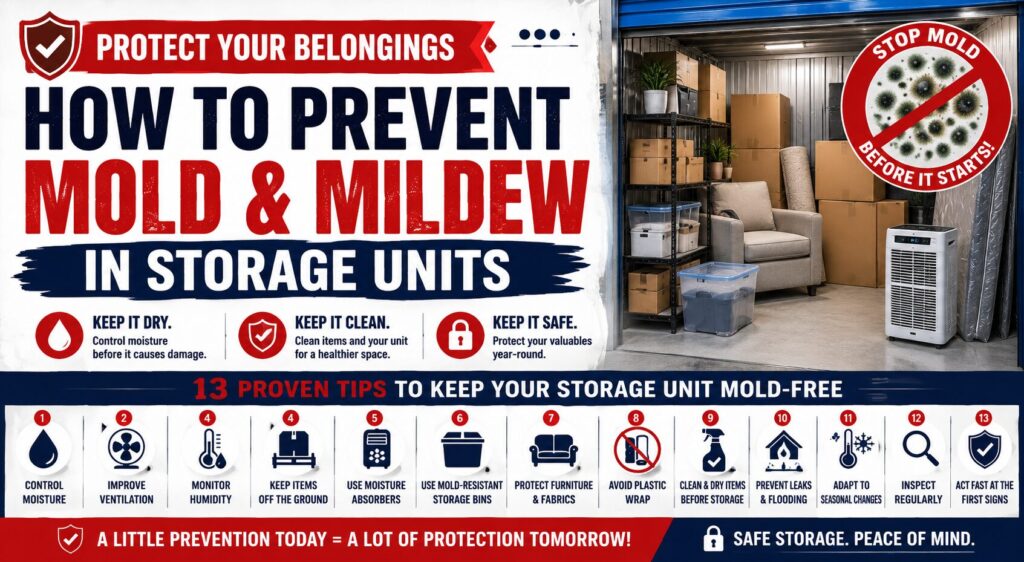
How to Prevent Mold & Mildew in Storage Units
Keeping belongings in storage can be convenient during moves, renovations, downsizing, or long-term travel. However, one of the biggest threats to stored items is moisture buildup. Without proper precautions, mold and mildew can spread quickly, damaging furniture, clothing, electronics, documents, and sentimental valuables.
Understanding How to Prevent Mold & Mildew in Storage Units is essential if you want to keep your possessions safe, clean, and in excellent condition over time.
This comprehensive guide explains proven strategies to stop mold growth before it starts while helping you maintain a dry, healthy storage environment year-round.
Why Mold & Mildew Grow in Storage Units
Mold and mildew thrive in environments with:
- High humidity
- Poor ventilation
- Warm temperatures
- Damp surfaces
- Organic materials
Storage units often become ideal breeding grounds because they remain closed for long periods with limited airflow.
Common causes include:
- Wet furniture
- Damp cardboard boxes
- Leaking roofs
- Condensation
- Flooding
- Humid weather
Once mold spores begin spreading, they can contaminate nearly everything inside the unit.
Understand the Difference Between Mold and Mildew
Although many people use the terms interchangeably, mold and mildew are slightly different.
Mildew
- Usually gray, white, or yellow
- Grows flat on surfaces
- Easier to clean
- Common on fabrics and paper
Mold
- Black, green, or dark-colored
- Penetrates surfaces deeply
- Can cause structural damage
- Often produces stronger odors
Both can create health problems, especially for individuals with allergies or respiratory conditions.
Choose the Right Storage Unit
Selecting the proper storage facility is one of the most important steps in How to Prevent Mold & Mildew in Storage Units.
Benefits of Climate-Controlled Storage
Climate-controlled units maintain stable:
- Temperature
- Humidity levels
- Air circulation
These units dramatically reduce condensation and moisture buildup.
They are ideal for storing:
- Wood furniture
- Electronics
- Clothing
- Documents
- Antiques
- Mattresses
- Artwork
While they cost more, they often save money by preventing damage.
Indoor vs Outdoor Storage Units
| Indoor Units |
Outdoor Units |
| Better temperature control |
More exposure to weather |
| Improved airflow |
Higher humidity risk |
| More secure |
Easier vehicle access |
| Lower mold risk |
Greater condensation potential |
Indoor climate-controlled units usually provide the best long-term protection.
For storage facility recommendations and safety tips, visit Self Storage Association.
Clean and Dry Items Before Storage
Never place damp or dirty items into storage.
Even slightly wet belongings can trigger widespread mold growth.
Items That Must Be Completely Dry
Before storing:
- Clothing
- Blankets
- Towels
- Furniture
- Carpets
- Appliances
Make sure everything is thoroughly dry.
Common Mistakes People Make
Many storage problems begin with simple oversights.
Storing Wet Furniture
Moisture trapped in cushions can create mildew rapidly.
Packing Damp Boxes
Cardboard absorbs moisture easily and promotes mold growth.
Ignoring Appliance Moisture
Refrigerators and washing machines often retain hidden water.
Always clean and dry appliances before storage.
Use Moisture Absorbers Effectively
Moisture absorbers help maintain lower humidity levels inside storage units.
Popular Moisture Control Products
Effective options include:
- Silica gel packs
- Charcoal absorbers
- Calcium chloride containers
- Portable dehumidifiers
Place absorbers near:
- Corners
- Fabric items
- Electronics
- Paper documents
Replace them regularly for continued effectiveness.
Improve Air Circulation Inside the Unit
Good airflow is critical when learning How to Prevent Mold & Mildew in Storage Units.
How to Improve Ventilation
You can improve circulation by:
- Leaving small gaps between boxes
- Using shelving units
- Avoiding wall-to-wall packing
- Keeping pathways open
Air movement helps reduce trapped moisture pockets.
Avoid Overpacking Your Unit
Overpacked storage units trap humidity and reduce ventilation.
Avoid:
- Stacking boxes tightly
- Pressing furniture against walls
- Blocking vents
Instead:
- Leave breathing room
- Store vertically when possible
- Organize items strategically
This simple adjustment greatly lowers mold risk.
Store Items Properly Off the Ground
Concrete floors can collect moisture through condensation.
Keeping items elevated helps protect against:
- Water damage
- Flooding
- Dampness
- Mold growth
Best Elevation Methods
Use:
- Wooden pallets
- Plastic pallets
- Metal shelving
- Storage racks
Never place cardboard boxes directly on concrete floors.
Protect Furniture and Fabrics
Furniture and fabrics are especially vulnerable to mildew.
Best Protection Methods
Use:
- Breathable covers
- Cotton sheets
- Furniture blankets
Avoid airtight plastic wrapping because it traps condensation.
How to Store Mattresses Safely
Store mattresses:
- Upright if recommended
- Fully dry
- Covered with breathable material
Check them periodically for odors or discoloration.
Avoid Plastic Wrapping Mistakes
Many people mistakenly believe plastic wrapping prevents mold.
In reality, airtight plastic often traps moisture inside.
When Plastic Becomes Dangerous
Plastic wrapping can:
- Increase condensation
- Trap humidity
- Prevent airflow
- Accelerate mildew growth
If using plastic bins:
- Ensure contents are dry
- Add moisture absorbers inside
- Open bins periodically if stored long-term
Breathable materials are usually safer for fabrics and furniture.
Monitor Humidity Levels Regularly
Humidity monitoring is one of the smartest ways to stop mold early.
Ideal Storage Humidity Levels
The safest humidity range is:
Higher humidity increases mold risk dramatically.
Use a Hygrometer
A hygrometer measures humidity inside the unit.
These inexpensive tools help identify moisture problems before damage occurs.
Prevent Water Leaks and Flooding
Water intrusion is a major cause of storage unit mold.
Inspect the Unit Carefully
Before renting:
- Check ceilings for stains
- Inspect corners for dampness
- Examine door seals
- Look for rust or leaks
Avoid units with visible moisture signs.
Protect Against Flooding
To reduce flood risks:
- Choose elevated units
- Avoid low drainage areas
- Store valuables on shelves
Even minor flooding can destroy stored belongings quickly.
Use Mold-Resistant Packing Supplies
Certain packing materials resist moisture better than others.
Best Packing Options
Choose:
- Plastic storage bins
- Waterproof containers
- Mold-resistant covers
- Vacuum-sealed bags
Avoid excessive cardboard if storing items long-term in humid climates.
Seasonal Mold Prevention Tips
Different seasons create different moisture challenges.
Summer Storage Tips
- Increase ventilation
- Use extra moisture absorbers
- Inspect units more frequently
Winter Storage Tips
- Watch for condensation
- Protect against temperature swings
- Avoid storing wet winter gear
Year-round monitoring is essential.
Signs Your Storage Unit Has Mold Problems
Early detection can prevent widespread damage.
Warning Signs Include
- Musty odors
- Visible black or green spots
- Damp cardboard
- Condensation on walls
- Discolored fabrics
If you notice these signs, act immediately.
How to Remove Mold Safely
If mold develops, clean affected items carefully.
Safe Mold Removal Tips
- Wear gloves and masks
- Use proper ventilation
- Remove heavily contaminated materials
- Clean surfaces with mold-safe cleaners
- Dry everything completely afterward
Severe mold infestations may require professional remediation.
Frequently Asked Questions
Can mold grow in climate-controlled storage units?
Yes, but the risk is much lower because humidity and temperature are regulated.
What is the best way to keep a storage unit dry?
Use moisture absorbers, improve airflow, and store items in climate-controlled conditions whenever possible.
Should I use plastic bins instead of cardboard boxes?
Yes. Plastic bins resist moisture better and help protect belongings from humidity.
How often should I check my storage unit?
Inspect your unit at least once a month to monitor for moisture or mold signs.
Can mold damage electronics in storage?
Yes. Excess moisture can corrode internal components and permanently damage electronics.
What humidity level prevents mold growth?
Maintaining humidity between 30% and 50% helps minimize mold risks.
Conclusion
Learning How to Prevent Mold & Mildew in Storage Units can save you from expensive damage, ruined valuables, and frustrating cleanup costs.
By controlling humidity, improving airflow, choosing the right storage unit, and inspecting your belongings regularly, you can create a safer and healthier storage environment.
Small preventative measures today can protect your possessions for months or even years to come. Whether you’re storing household items, business inventory, or treasured keepsakes, proper moisture control is the key to long-term preservation.